North Country
Local Home Inspection in Essex County, NY
Tell us about the property and we will route your request to a NACHI-certified inspector who serves Essex County. Free to request, no obligation, residential or commercial.
- Inspectors listed
- 1
- City pages
- 0
- To request
- Free
Essex County sits almost entirely inside the Adirondack Park, stretching from the High Peaks and Lake Placid in the north down through Elizabethtown, Westport, and Ticonderoga along Lake Champlain's western shore. It is one of the most geographically distinctive counties in New York State to buy or own a home in: a mix of century-old village houses, seasonal lakefront camps, mid-century ranches, and modern construction, almost all of it shaped by mountains, lakes, short building seasons, and a land-use framework unlike anywhere else downstate.
That combination makes the home inspection step matter in some specific, locally grounded ways. A 1910 cure cottage in Saranac Lake, a 1930s camp on Upper Saranac Lake, and a 1990s raised ranch outside Elizabethtown can all have very different things an inspector needs to look for, from century-old wiring to seasonal water systems to how a foundation has handled decades of Adirondack freeze-thaw cycles. This page walks through what buyers, sellers, and owners in Essex County should understand about the county's housing stock, what a New York State-licensed, NACHI-certified inspector actually checks, and how to think about cost, timing, and the specific concerns that come up most often in this part of the state.
Currently, this directory lists 1 NACHI-certified home inspector serving Essex County, based in Saranac Lake. The information below is general educational content about the county and the inspection process; to connect with a listed inspector directly, use the request form elsewhere on this page.
What We Do Across Essex County
Think of Inspecverse as the front desk for inspections in North Country. Every request for a local home inspection in Essex County comes to us first, gets checked for the details an inspector needs, and is passed to a NACHI-certified professional who has listed Essex County as an area they serve.
You stay in control the whole time: requesting a quote is free, there is no obligation to hire, and you decide which inspector to work with. Right now 1 NACHI-certified inspector is listed for Essex County on this page.
How It Works: Your Home Inspection in Essex County in Four Steps
- Tell us about the property. Residential or commercial, the address in Essex County, the size and your timing.
- We review and route it. Your request goes to a NACHI-certified inspector who lists Essex County.
- Get your quote. The inspector follows up with pricing and available dates.
- Inspect and receive the report. You attend if you can, then use the written report to make your decision.
It takes a couple of minutes to request a free quote.
Directory
Home Inspectors Serving Essex County
1 NACHI-certified inspector
Michael Magurk
Evergreen Home Inspection
Certified Professional Inspector®
Contact details stay private. Send one request and we route it to an inspector who serves Essex County.
Request a QuoteWhy Choose Inspecverse for a Home Inspection in Essex County?
Buyers and owners in Essex County, NY have plenty of ways to find an inspector. Here is why many start with us:
- Local by design. Requests for Essex County go to inspectors who list this area, not to a national call center.
- One form, both tracks. Residential and commercial requests use the same short form, and you only answer the questions that apply to your property.
- Credentials up front. Inspectors on this page are shown by name and InterNACHI credential, so you can see who serves Essex County before you ask for a quote.
- Free, no obligation. Submitting a request costs nothing and does not commit you to hiring anyone.
- Plain-English New York guidance. We explain how New York licensing works so you can check any inspector yourself.
Ready when you are: request a free quote.

What a Home Inspection in Essex County Covers
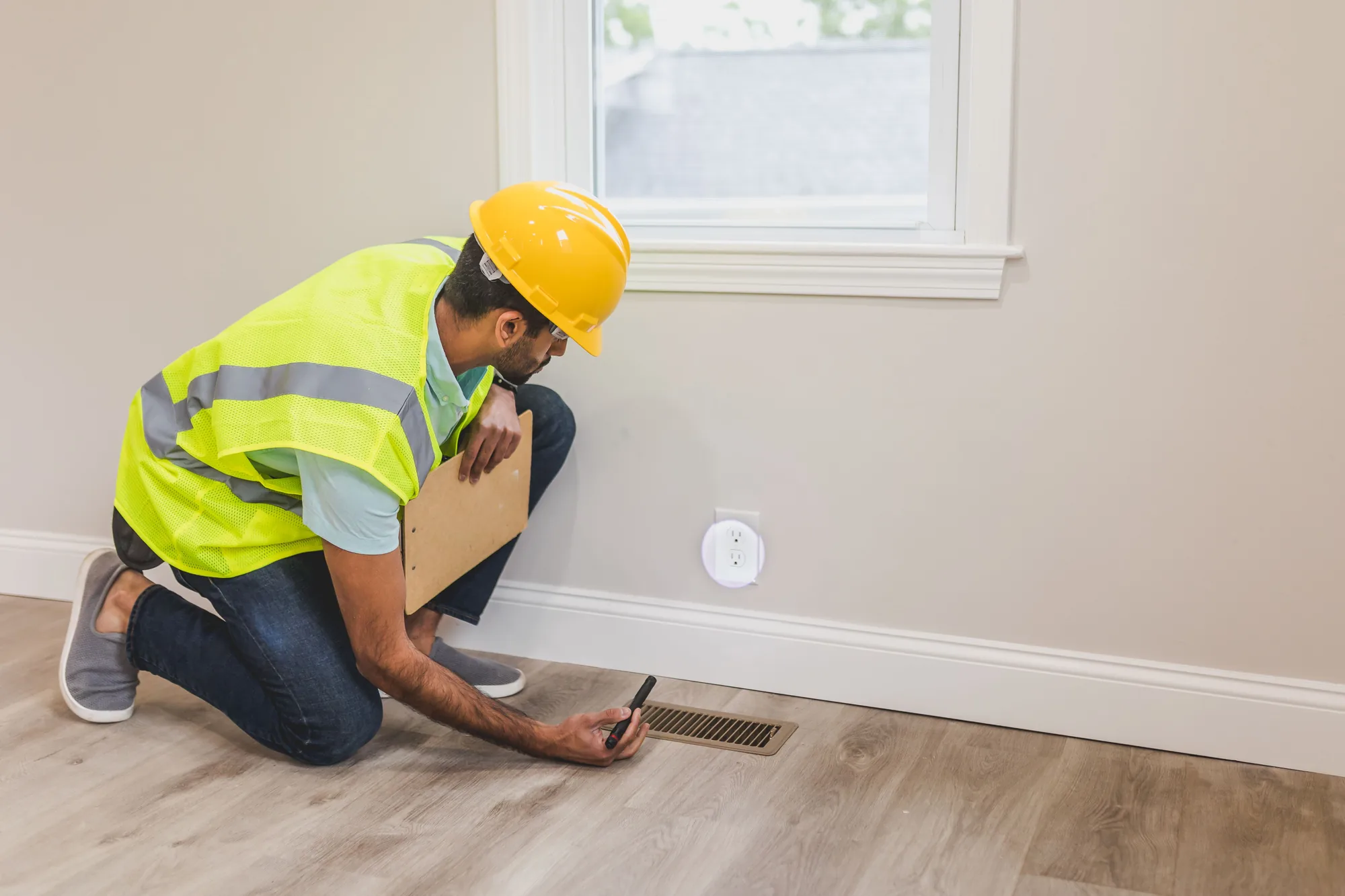
Under New York's home inspection law, a home inspection is a visual, non-invasive examination of a home's readily accessible systems and components. In practice, a standard home inspection in Essex County, NY looks at:
- Structure: foundation, framing, basement or crawlspace.
- Exterior and roof: roof covering, flashing, gutters, siding, grading and drainage.
- Plumbing: supply and drain lines, fixtures and the water heater.
- Electrical: service panel, branch wiring, outlets and safety devices.
- Heating and cooling: furnace or boiler, distribution and visible ductwork.
- Interior, attic and insulation: walls, ceilings, floors, windows, doors and ventilation.
Inspectors do not open walls or move the seller's belongings, so anything hidden or inaccessible is outside the scope.
What Inspectors Watch for in Essex County
Older housing stock, long heating seasons and rural lots shape inspections in North Country. Expect attention to heating systems, chimneys, roof wear, attic ventilation, basement moisture and, where present, wells and septic systems.
Farmhouses and older village homes can have a mix of original and updated systems, so tell us the approximate age of the property when you request your local home inspection in Essex County.
What Makes Us Better Than a Generic "Home Inspector Near Me" Search
A generic search for a home inspector near Essex County returns ads, national lead sites and inspectors who may be an hour away. Inspecverse is built only for New York and organized county by county and city by city, so the inspectors listed for Essex County are the ones who say they serve it.
- New York only. Every page, including this one, is written around New York housing and New York inspection rules.
- Local pages, real detail. The guide below covers housing, climate and systems that matter in Essex County specifically.
- Residential and commercial. One directory for a starter home, a rental building or a storefront.
- Straight talk. We explain what to check yourself instead of promising outcomes we cannot control.
Need a home inspection near Essex County?
Residential or commercial. Free to request, no obligation.
What to Consider Before You Book a Home Inspection in Essex County
- An active New York license. Home inspectors in New York must be licensed by the Department of State under Article 12-B of the Real Property Law. Ask for the license number and look it up before the inspection.
- Liability insurance. New York requires licensed home inspectors to carry general liability insurance of at least $150,000 per occurrence and $500,000 in the aggregate. Ask for the certificate.
- A sample report. A good report is organized, photo-documented and clear about what is a safety issue, what needs repair and what is routine maintenance.
- Scope and add-ons. Radon, well water, septic and wood-destroying insect checks are often separate services. Mold assessment in New York requires a separate Mold Assessor license.
- Timing. Line up your home inspection in Essex County, NY early in your contingency window so there is time to bring in a specialist if the inspector recommends one.
For Sellers: Fewer Surprises When You List in Essex County
Deals often wobble after the buyer's inspection. Getting your own inspection first gives you the report before anyone else sees it, so a roof, electrical or drainage issue does not become a last-minute price cut.
If you are getting ready to sell, request a free quote for a pre-listing inspection in Essex County and plan repairs before your listing photos go up.
Commercial Property Inspection in Essex County
Inspecverse also routes requests for a commercial property inspection in Essex County: offices, retail, mixed-use, light industrial and multi-family buildings. Commercial inspections usually focus on the roof, structure, building envelope, mechanical, electrical and plumbing systems, parking and site drainage, and life-safety items, with the scope agreed in advance.
Choose the commercial track on the form, tell us the building type and size, and we will send it to an inspector who handles commercial work in North Country.
Home Inspection Near Essex County: Communities We Cover
This page is your starting point for a home inspection near Essex County anywhere in Essex County, NY. If your town is not named, send a request with your address and we will check which listed inspectors serve it.
Essex County is part of the North Country region, so you will also find links to nearby counties at the bottom of this page if your property sits close to a county line.
What Happens After Your Essex County Home Inspection
The written report is the deliverable that matters. Use it to decide whether to proceed, renegotiate or ask for repairs, and to get contractor quotes for bigger items before your contingency window closes.
If the inspector recommends a specialist, such as a structural engineer, roofer or septic contractor, schedule that quickly. Time is usually the tightest constraint after a home inspection in Essex County, NY.
What Affects the Cost of a Home Inspection in Essex County
We do not publish prices because they depend on the property and the inspector. The main factors are:
- Size and age of the home; older and larger homes take longer.
- Property type: single-family, condo, multi-family or commercial.
- Foundation and access: crawlspaces and large attics add time.
- Add-ons: radon, well water, septic, sewer scope and WDI reports.
The fastest way to get a real number is to request a free quote with your property details.
Local guide
The Essex County Home Inspection Guide
Housing, climate, systems and New York rules that shape a home inspection in Essex County, written for buyers and sellers.
A Brief History of Housing in Essex County
Essex County was established in 1799, and its earliest housing followed the same pattern as much of upstate New York: farmhouses tied to an agricultural economy, built along the valleys and lower slopes where the land could support crops and livestock. That changed meaningfully around 1800, when iron ore discoveries drew industry into the region, and later in the 1800s when logging and the wood products trade became the county's two dominant industries. Each of those economic waves left a visible mark on the housing stock that remains today, from scattered farmhouses in the lower valleys to denser village construction that grew up around mills, forges, and rail connections.
The county's built environment is also unusual in New York for how much of it was shaped by health tourism and seasonal wealth rather than ordinary residential growth. Saranac Lake became a nationally known tuberculosis treatment center starting in the 1880s, and the wealthy who vacationed on the Adirondack lakes built elaborate seasonal retreats, some of which are now recognized as historic "Great Camps." Both trends produced housing types that a buyer won't encounter in most other parts of the state, and both are discussed in more detail below.
Pre-1900 Farmhouses and Early Village Construction
The oldest surviving homes in Essex County tend to be farmhouses from the 1800s, often wood-framed and modest in scale, built when agriculture was still the county's economic base before iron and timber took over. Village cores that grew around early industry, such as parts of Elizabethtown (the county seat) and Westport, retain commercial and residential buildings from the mid-to-late 1800s. Homes from this era commonly predate indoor plumbing, central heating, and modern electrical service as originally built, meaning most have gone through multiple rounds of system upgrades over the past century, often by different owners with different standards, which is exactly the kind of layered history a thorough inspection is meant to uncover.
The Tuberculosis Treatment Era in Saranac Lake
Saranac Lake's growth between roughly 1880 and 1920 is genuinely unlike anything else in the Adirondacks. The village became a nationally known center for tuberculosis treatment, and its building stock from that era reflects it directly: many homes, including the cottages in what's now the Helen Hill Historic District, were built or modified with large "cure porches" designed for patients to spend extended time in fresh air, a defining architectural feature of the period. Downtown, the Berkeley Square commercial district contains buildings constructed between 1867 and 1932 in a range of styles. For a buyer today, a cure-era home means an inspector should expect to find porches and additions that were purpose-built for a use that no longer applies, along with the layered plumbing, heating, and electrical history typical of a building now well over a century old.
Common Home Styles and Building Types Across the County
Essex County's housing stock is noticeably more varied by era and type than many other upstate counties, largely because its economy and population patterns shifted several times over two centuries rather than growing steadily in one direction. A buyer searching countywide will encounter everything from pre-war village homes to mid-century ranches to architecturally significant seasonal camps, often within the same small town.
Understanding which category a given property falls into matters for inspection planning, because each type tends to carry a different set of common issues, from aging masonry chimneys in older homes to the specific water and heating arrangements found in seasonal properties.
Farmhouses and Pre-War Village Homes
These are the county's oldest common housing type, typically wood-frame construction with stone or masonry foundations, often with additions built on over multiple decades as families and needs changed. Original wiring and plumbing, where it survives at all, predates modern code by a wide margin, and most have been rewired or replumbed at least partially; an inspector's job is to figure out how completely, and whether any older materials or methods remain in service.
Mid-Century Ranches and Raised Ranches
Like much of rural and small-town New York, Essex County saw a wave of single-story ranch and raised-ranch construction roughly from the 1950s through the 1970s, often on larger rural lots outside the older village cores. These homes are generally more straightforward to inspect than pre-war construction, but their age means original heating equipment, if it survives, is well past typical service life, and homes built before 1978 fall into the window where lead paint should be assumed present until tested otherwise.
Seasonal Camps and Lakefront Great Camps
Essex County's lakes, particularly the Saranac chain and Upper Saranac Lake, are home to a distinctive building type: the seasonal camp, ranging from simple cottages to architecturally elaborate "Great Camps" built by wealthy families in the early 1900s, some of which carry National Historic Landmark status. These properties often have supplemental heating systems designed for seasonal rather than year-round use, water systems that are drained and winterized annually, and additions built across multiple eras. An inspection on one of these properties benefits from extra time and from an inspector who understands that a seasonal system isn't automatically a deficient one, it's a different design intent.
What Buyers Should Know About Essex County's Climate and Building Conditions
The Adirondack climate is a real factor in how homes in this county age and what problems show up. Winters are long and cold relative to most of New York, snow loads can be significant, and the freeze-thaw cycle that drives frost heave and foundation movement runs for a longer stretch of the year here than it does downstate. None of this means Essex County homes are inherently more problem-prone, but it does shape what an inspector is specifically watching for.
Roofing and Snow Load Considerations
Roofs in this region need to handle sustained snow accumulation, and ice damming, where melting snow refreezes at the eaves and backs water up under shingles, is a recurring concern in homes with inadequate attic insulation or ventilation. An inspector will typically look at attic insulation levels, ventilation, and any visible signs of past ice-dam-related water intrusion along eaves and in attic spaces, since this is one of the more common cold-climate issues that shows up in older homes throughout the county.
Foundation Movement from Freeze-Thaw Cycles
Frost heave, the seasonal expansion and contraction of ground moisture as it freezes and thaws, can affect foundations, walkways, and attached structures like porches over time, particularly on older or shallow foundations that predate modern frost-depth footing requirements. This is a normal part of owning a home in a cold-climate region like the Adirondacks, but it's exactly the kind of gradual, easy-to-miss issue a trained inspector is looking for: hairline versus structural cracking, uneven settling, and whether drainage around the foundation is directing water away from the house or toward it.
Foundation and Basement Types Common in Essex County
Foundation type correlates strongly with the age and location of a home in this county. Older village and farmhouse construction commonly used stone or early masonry foundations, often with partial or full basements that were never intended to be dry, finished living space. Newer construction, particularly from the mid-20th century forward, more commonly uses poured concrete, and some newer or seasonal camp construction uses pier, post, or slab foundations suited to sites with ledge rock close to the surface, a common condition in parts of the Adirondacks.
Stone and Early Masonry Foundations
Homes from the 1800s and early 1900s frequently sit on dry-laid or mortared stone foundations, which can be entirely sound after a century or more but require a different evaluation approach than poured concrete: mortar condition, evidence of past repointing, bulging or leaning walls, and how the foundation has handled water over its lifetime all matter more than they would with newer construction. A stone foundation that's been dry and stable for decades is not automatically a red flag, but one with active water intrusion, significant cracking, or visible lean deserves a closer, often specialist-level look.
Ledge Rock and Shallow-Soil Building Sites
Because much of Essex County sits on exposed or near-surface bedrock, some homes, particularly camps and rural construction, were built on shallower foundations, piers, or slab systems designed around a site's rock conditions rather than a deep, conventional basement. This isn't a defect in itself, but it does change what questions matter: drainage around a shallow foundation, how a crawlspace (where present) is ventilated and insulated, and whether moisture is managed effectively given the site's specific grading and rock conditions.
Well Water and Septic Systems: What's Typical in This County
Essex County sits almost entirely within the Adirondack Park, and like the great majority of Adirondack Park communities, most homes outside the larger villages rely on private wells and on-site septic systems rather than municipal water and sewer. Even some of the larger villages, including communities working on sewer district expansions, have on-site systems serving a significant share of surrounding homes. For a buyer, this means well and septic evaluation is frequently just as important as the structural home inspection itself, even though it's typically a separate service from a standard general inspection.
The county has also recognized this reality directly: a county-run assistance program exists to help eligible low- and moderate-income homeowners fund private well and septic improvements, which underscores how central these systems are to the local housing stock rather than being an edge case.
Private Well Water Testing
At minimum, a bacteria test (total coliform) is the standard baseline for any private well being purchased, and many buyers choose to test for additional parameters depending on the specific area and known regional concerns. Well water quality can vary meaningfully from one property to the next even within the same small town, since it depends on the specific well's depth, construction, and local groundwater conditions, which is why testing the actual well on the actual property, rather than relying on general area reputation, is the only reliable approach.
On-Site Septic System Evaluation
A septic evaluation, typically performed as a separate service from the general home inspection, looks at the system's apparent condition, drainage field performance, and signs of age or distress. Given how many homes in this county rely on septic systems, and how expensive a failing system can be to replace, a dedicated septic inspection is one of the most commonly recommended add-ons for buyers in rural parts of Essex County, alongside well water testing.
Radon: What's Actually Known for This Region
Radon potential in New York varies considerably by region, and it's worth being precise about what's actually known for Essex County rather than citing a single countywide number that doesn't hold up to scrutiny. Much of the county sits on the anorthosite and other metamorphic bedrock that characterizes the Adirondack high peaks region, rock types that geologists generally associate with lower radon-producing potential compared to some other parts of New York State, since they tend to be lower in the uranium and thorium that decay into radon gas.
That said, Essex County's geology is not uniform. The region also contains granite and pegmatite bodies, and some older regional surveys have flagged areas near the contact zones between different rock types, as well as certain glacial till deposits left behind after the last ice age, as having elevated radioactivity relative to the surrounding bedrock. In practice, this means radon potential can genuinely differ from one property to another within the same town, which is precisely why the EPA and New York State Department of Health both recommend testing every home individually rather than relying on a zone map or county average to make that decision.
Why a Home-Specific Test Matters More Than a County Label
Because the underlying geology in Essex County is genuinely mixed, bedrock type can shift within a short distance, and glacial deposits add another layer of local variability, a radon test performed at the specific property is the only way to know what's actually happening in a given basement or lowest living level. Short-term and long-term test kits are both widely available and inexpensive relative to the value of knowing the result, and many inspectors offer radon testing as an add-on to a general inspection.
Older Homes: Lead Paint, Asbestos, and Pre-Code Systems
Essex County's housing stock includes a meaningful share of homes built well before 1978, the federal cutoff year after which lead-based residential paint was banned. That includes much of Saranac Lake's cure-era housing, older farmhouses throughout the county, and many of the camps and cottages built in the early 1900s. For any home from this era, the standard, defensible assumption is that lead-based paint could be present on surfaces that haven't been fully abated, until testing says otherwise.
Asbestos is a related but separate concern that shows up less predictably. It was commonly used in pipe insulation, some older boiler and furnace components, certain vinyl floor tiles and adhesives, and some siding and roofing materials roughly from the 1940s through the 1970s. A general home inspection will note visually apparent signs and suspect materials but typically doesn't include laboratory sampling for either lead or asbestos; that's usually a specialized add-on, most relevant when renovation or disturbance of old materials is planned.
Knob-and-Tube and Early Electrical Systems
Homes old enough to have been part of Saranac Lake's cure era or the county's earlier farmhouse construction may still contain remnants of knob-and-tube wiring or other early electrical methods, even if the home has been substantially rewired since. An inspector will look for any portions of an older system still in active use, since this affects both safety and, often, a buyer's ability to obtain standard homeowners insurance without remediation.
Galvanized and Early Copper Plumbing
Older plumbing materials, including galvanized steel pipe that corrodes from the inside over decades, are still found in a portion of the county's pre-war housing stock. An inspector typically evaluates visible plumbing for material type, apparent condition, and water pressure performance, flagging materials that are approaching or past typical functional lifespan.
Heating Systems Typical for Essex County Homes
Given the Adirondack climate, heating system condition and capacity matter more here than in milder parts of the state. The county's housing stock reflects decades of heating technology: older homes may retain oil-fired boilers or furnaces original or close to original installation, while many homes have been converted to propane, and wood and pellet stoves remain common as either primary or supplemental heat sources, particularly in rural and seasonal properties.
Oil, Propane, and Wood/Pellet Heating
Fuel oil heating has a long history in this region and remains common, alongside a significant share of homes using propane, particularly where natural gas service isn't available, which describes most of rural Essex County. Wood and pellet stoves are common supplemental or sometimes primary heat sources in older and seasonal homes; an inspector will evaluate venting, clearances, and apparent condition of any wood-burning appliance as part of a general inspection, and a separate chimney-specific evaluation is often recommended for older masonry chimneys.
Heating System Age and Expected Lifespan
Because many homes in this county are older or seasonal, heating equipment age is a frequent inspection finding. A furnace or boiler well past typical service life isn't automatically failing, but it is a legitimate factor in budgeting for near-term replacement, and an inspector will typically note the apparent age and condition of the system along with any visible signs of inefficient operation or deferred maintenance.
The Buyer's Inspection Process in Essex County
For most residential purchases in New York, the home inspection happens after an offer is accepted and during a contract-specified inspection period, giving the buyer a window to have the property professionally evaluated before the purchase becomes final. In Essex County specifically, a few practical factors are worth planning around: travel distances between rural properties can be longer than in denser counties, seasonal scheduling (particularly around the winter ski season and summer/fall tourist season) can affect inspector availability, and properties that are seasonal camps or large historic homes may reasonably take longer to inspect thoroughly than a standard single-family home.
Buyers should expect the inspector to walk the property's accessible systems and structure, from roof and attic to foundation and basement/crawlspace, electrical panel, plumbing, heating and cooling equipment, and visible structural components, then provide a written report, typically within a day or two, detailing findings with supporting photos.
Scheduling Around Seasonal Access
Some Essex County properties, particularly camps and rural homes with long driveways or seasonal road maintenance, can be harder to access fully during winter months. If a purchase is happening in winter, it's worth confirming with the inspector in advance whether full access to all systems and exterior areas will be possible, and discussing options for revisiting any areas that couldn't be fully evaluated due to snow or ice.
What to Expect in the Written Report
A standard inspection report documents the condition of major systems and components, flags safety concerns and items needing repair or further evaluation, and typically includes photographs. It is a snapshot of the property's condition on the day of inspection, not a guarantee against future issues, and many buyers use the findings as a basis for further negotiation with the seller or for planning post-purchase repairs and budgeting.
What Sellers Should Expect Before Listing
New York State requires most residential sellers to complete a Property Condition Disclosure Statement, or provide the buyer a credit at closing in lieu of it, disclosing what the seller knows about the property's condition. This is a statewide requirement, not something specific to Essex County, but it interacts with the inspection process directly: it sets the baseline of what's already been disclosed before an independent inspection verifies the property's actual physical condition.
Many sellers in this county choose to get a pre-listing inspection, particularly for older homes, cure-era properties, or seasonal camps where unexpected findings during a buyer's inspection could complicate or delay a sale. A pre-listing inspection gives the seller advance notice of issues that might otherwise surface during negotiations, allowing time to either address them or price the property with full information in hand.
Pre-Listing Inspections for Older or Unique Properties
For century-old village homes, historic camps, or any property with known age-related complexity, a pre-listing inspection can reduce the risk of a deal falling apart over findings discovered late in the process. It won't eliminate the buyer's own right to an independent inspection, but it does let a seller address major issues, gather repair estimates, or adjust pricing expectations well ahead of going to market.
New York State Licensing Requirements for Home Inspectors
New York State has required home inspector licensing since 2006, governed by Article 12-B of the Real Property Law and administered by the Department of State's Division of Licensing Services. To become licensed, an applicant generally must complete either a state-approved training course of at least 140 hours (including a supervised field component) or document a substantial number of supervised home inspections performed under a licensed inspector, professional engineer, or architect, in addition to passing a qualifying written examination and meeting background requirements. Licensed inspectors are also required to carry a minimum level of commercial general liability insurance.
This licensing requirement applies uniformly across New York State, meaning an inspector licensed to work in Essex County meets the same baseline state standard as one working anywhere else in New York. NACHI certification, held by the inspectors listed in this directory, represents an additional, association-based layer of training standards, continuing education requirements, and a professional code of ethics on top of the state license, not a replacement for it.
State License Versus Professional Certification
It's worth understanding the distinction clearly: the New York State license is the legal requirement to practice as a home inspector in this state, while certification from an organization like NACHI is a voluntary, additional credential that reflects ongoing training and adherence to a professional standards body. Buyers in Essex County should expect any inspector they hire to hold the state license at minimum, with NACHI certification as a meaningful additional signal of ongoing professional development.

How to Choose a Home Inspector in Essex County
Choosing an inspector for a property in this county benefits from a few considerations beyond the baseline of state licensing and professional certification. Given how varied the housing stock is here, from cure-era village homes to seasonal Great Camps to standard mid-century ranches, an inspector's familiarity with the specific property type matters more here than it might in a more uniform suburban market.
Ask About Experience With Your Property Type
If you're buying a historic home, a seasonal camp, or a property with a well and septic system, it's reasonable to ask directly whether the inspector has relevant experience with that specific type of property, since the evaluation approach for a century-old stone foundation or a seasonal water system genuinely differs from a standard suburban inspection.
Confirm What's Included Versus What Costs Extra
A general home inspection typically does not include well water testing, septic evaluation, radon testing, or wood-destroying insect inspection as standard; these are usually offered as add-ons. Given how relevant each of these is to a typical Essex County property, it's worth clarifying up front which services are included in a quoted price and which would need to be added separately.
Review the Sample Report Format
Most inspectors can provide a sample report before you hire them. Reviewing one gives a sense of how thoroughly findings are documented, how clearly photos are presented, and whether the report format will be useful for your own decision-making and any negotiation that follows.
Typical Home Inspection Costs in Essex County
As a general planning estimate for 2025-2026, a standard single-family home inspection in this region of New York tends to fall roughly in the $350 to $600 range, though the specific number depends heavily on the home's square footage, age, and complexity. Larger homes, properties with multiple outbuildings, and older homes with more systems to document typically fall toward the higher end of a realistic range.
Add-on services common and often genuinely necessary in Essex County, including well water testing, septic evaluation, radon testing, and wood-destroying insect inspection, are usually priced separately from the base inspection fee. Because a meaningful share of homes in this county rely on private wells and septic systems, many buyers end up budgeting for one or more of these add-ons as a practical necessity rather than an optional extra. These figures are general estimates meant for planning purposes, not quotes; actual pricing should always be confirmed directly with the inspector for your specific property.
Factors That Can Move the Price
Property size and age are the two biggest cost drivers, followed by travel distance for rural properties, the presence of multiple structures (common for camps with boathouses, garages, or guest cabins), and whether add-on services like well, septic, or radon testing are bundled into the request.
Closing Timeline Considerations
In a typical New York residential purchase, the inspection period is specified in the contract, giving the buyer a defined window after acceptance to complete the inspection and raise any findings. In Essex County, a few practical factors can affect how that timeline plays out in practice: inspector availability can tighten during peak seasonal periods (notably ski season in the Lake Placid area and the summer-into-fall tourist season countywide), well and septic testing results sometimes take longer to come back than the general inspection itself, and winter weather can occasionally delay full access to certain exterior areas or outbuildings.
Buyers working within a tight contractual inspection window should consider scheduling the general inspection as early as possible and, if well or septic testing is needed, confirming turnaround times for lab results so that any necessary negotiation can still happen within the contract's deadlines.
Coordinating Multiple Inspections and Tests
When a purchase involves a general home inspection plus well water testing, septic evaluation, and possibly radon testing, coordinating all of them within a single inspection period takes some planning. Many buyers schedule the general inspection first and arrange for well and septic sampling the same day or shortly after, since lab turnaround for water testing in particular can add several days beyond the inspection itself.
Saranac Lake: What Makes This Market Distinctive
Saranac Lake is currently the one city or town in Essex County with a NACHI-certified inspector listed in this directory, and it's also one of the most architecturally distinctive communities in the entire county. The village's late-1800s and early-1900s growth as a nationally recognized tuberculosis treatment center left behind a genuinely unusual housing stock: homes built or modified with large cure porches, a downtown commercial district (Berkeley Square) with buildings dating from 1867 to 1932, and residential areas like Helen Hill where cure-era cottages remain a defining visual feature.
For a buyer or owner here, that history isn't just trivia, it shapes what an inspection needs to account for. A cure porch addition built for a use that no longer exists may have its own structural and weatherproofing considerations distinct from the original house. Homes in this age range commonly carry layered plumbing and electrical history, with multiple generations of upgrades over more than a century. The village's early infrastructure investment (it had a gravity water system by 1893 and a full sewer system completed by 1912, unusually early for the Adirondacks) also means homes within the historic village core are more likely to be on municipal water and sewer than homes in Essex County's more rural towns, which is itself worth confirming property by property.
Elizabethtown and the County Seat Communities
Elizabethtown, the Essex County seat, sits in the High Peaks region and has a housing stock shaped by a long, gradual history rather than a single economic boom: its population actually peaked in the mid-1800s and has generally declined since, which means a meaningful share of the town's older housing predates most of the modern systems a buyer would take for granted elsewhere. The town is also currently working on expanding municipal sewer infrastructure, a reminder that even established Essex County communities are still transitioning parts of their housing stock from on-site septic toward municipal systems, which is worth confirming for any specific property rather than assuming based on the town's general reputation.
Ticonderoga: Industrial History and Its Housing Legacy
Ticonderoga's housing stock carries the fingerprints of over a century of industrial history. The town grew around pulp and paper production, with a mill (now operated by International Paper, which purchased the original operation in 1925) that has run continuously for well over a century, and around graphite mining and refining that began in the 1800s and continued processing imported ore into the late 1960s. Housing built during these industrial periods, including worker housing near the historic mill sites, reflects the practical, often efficient construction standards of its era rather than the architectural distinctiveness of Saranac Lake's cure cottages. For a buyer here, that generally means a wider range of home ages and conditions clustered closer to the village center, with more rural and lakefront construction spreading out from there, each carrying different inspection priorities depending on era.
Westport and Essex Village: Lake Champlain's Western Shore
Westport and the hamlet of Essex sit along Lake Champlain rather than in the mountainous interior, giving this part of the county a different housing character: more historic lakefront and village homes with direct water exposure, and development patterns that, in at least some areas, have been explicitly tied to municipal sewer district expansion as a condition of new building. For buyers looking at property here, lake proximity brings its own inspection considerations, including dock and shoreline structures (which typically fall outside a standard home inspection's scope and may need a separate marine or structural specialist), plus the usual questions about whether a given property sits within an area served by municipal water and sewer or still relies on private well and septic systems, something that can vary within a short distance along this shoreline.
Flood and Water Exposure Considerations Near Lakes and Rivers
Essex County's defining geographic feature, its lakes and the Lake Champlain shoreline, brings real value to many properties but also means flood and water exposure is a legitimate consideration for a meaningful share of the county's housing stock, particularly along Lake Champlain in Westport and Essex, and around the Saranac lakes and other interior water bodies. This doesn't mean every lakefront or near-water property has a flood problem; it means flood zone status is worth checking specifically for any property near water rather than assumed either way.
A standard home inspection does not determine flood zone designation or flood insurance requirements; that information comes from FEMA flood maps and is typically confirmed through the lender or a title company during the purchase process. What an inspector can and will note is any visible evidence of past water intrusion, grading and drainage issues around the foundation, and the condition of any sump systems or water management features already in place.
Frequently Overlooked Items in Essex County Home Inspections
Beyond the major systems every inspection covers, a few items come up often enough in this county's specific housing context to be worth calling out directly, since they're sometimes assumed to be fine rather than actually checked.
Chimney and Masonry Condition on Older Homes
Masonry chimneys on older homes, common throughout the county's pre-war housing stock, are subject to decades of freeze-thaw stress in this climate, and a general home inspection's visual review of a chimney doesn't always substitute for a dedicated chimney sweep or mason's evaluation, particularly if the chimney serves an active wood stove or fireplace.
Outbuildings, Boathouses, and Detached Structures
Many Essex County properties, especially camps and larger rural parcels, include detached garages, sheds, boathouses, or guest cabins. These are sometimes outside the core scope of a standard inspection or may require separate arrangement to access and evaluate fully; it's worth confirming with the inspector in advance which detached structures are included.
Home Inspection in Essex County: FAQ
How do I get a home inspection near Essex County, NY?
Send a free request through Inspecverse with your property address, property type and timing. We review it and route it to a NACHI-certified inspector who serves Essex County, who may then contact you with a quote. Right now 1 NACHI-certified inspector is listed for Essex County on this page.
Does Inspecverse perform the inspection itself?
No. Inspecverse is a referral directory. The licensed home inspector you hire performs the inspection and writes the report. We do not license, insure or guarantee inspectors, so always confirm the inspector holds an active New York home inspector license before the inspection.
Does New York State require home inspectors in Essex County to be licensed?
Yes. New York State has required home inspector licensing since 2006 under Article 12-B of the Real Property Law, administered by the Department of State's Division of Licensing Services. A licensed inspector has completed state-approved training (or a supervised-inspection pathway), passed a qualifying exam, and carries the insurance the state requires. This applies the same way in Essex County as it does in Manhattan: the license is statewide, not county-issued. NACHI certification, which the inspectors in this directory hold, adds a private-association layer of standards and continuing education on top of the state license, not a substitute for it.
Is radon a concern for homes in Essex County?
It's worth testing for, as it is almost everywhere in New York, but Essex County doesn't fit a simple label. Much of the county sits on anorthosite and other metamorphic rock that geologists generally associate with lower radon-producing potential than some other parts of the state, but the county also contains granite and pegmatite bodies, and the glacial till deposited across the region varies block by block in how much it can transmit soil gas. That mix is exactly why a home-specific radon test, run during or shortly after the inspection, is the only way to know what a given house in Saranac Lake, Elizabethtown, or anywhere else in the county is actually dealing with. Don't rely on a county-wide number to decide whether to test.
Should I worry about lead paint or asbestos in an older Essex County home?
If the home was built before 1978, assume lead-based paint could be present until testing says otherwise; that's the federal cutoff year, and it applies to a large share of the county's older housing stock, including Saranac Lake's cure-cottage-era buildings and many farmhouses and camps dating to the early 1900s. Asbestos shows up less predictably but turns up often enough in pipe insulation, older boiler jacketing, some vinyl floor tile, and certain siding materials from roughly the 1940s through the 1970s to be worth a specific look, especially in homes that still have original heating systems. A general home inspection flags visual indicators and will typically recommend a specialized lead or asbestos test when disturbance (renovation, demolition) is planned, since sampling and lab analysis are usually outside the standard inspection scope.
Do most homes in Essex County use well water and septic systems?
Across most of the county, yes. Essex County sits almost entirely within the Adirondack Park, and outside of villages like Saranac Lake, Lake Placid, and parts of Ticonderoga and Elizabethtown that have municipal water or sewer infrastructure, the great majority of homes rely on private wells and on-site septic systems. This is typical of Adirondack Park communities generally. For a buyer, that means a water test (for bacteria at minimum, and often for other parameters depending on the area) and a septic evaluation are usually worth budgeting for alongside the general home inspection, since neither system is typically covered in full technical depth by a standard inspection.
What does a typical home inspection cost in Essex County?
As a general estimate for 2025-2026, a standard single-family home inspection in this part of New York tends to fall somewhere in the neighborhood of $350 to $600, with the exact number depending on the home's size, age, and location, plus whichever add-ons are selected. Well water testing, septic inspection, radon testing, and wood-destroying insect inspections are usually priced separately and can add a meaningful amount to the total. Because Essex County includes everything from small village homes to large lakefront camps and Great Camp-style properties, it's worth asking any inspector for a quote based on your specific property rather than assuming a flat countywide rate. Treat any number here as a planning estimate, not a quote.
How long does a home inspection take, and when should it happen during a purchase?
For a typical single-family home, plan for roughly two to four hours on site, with larger or older properties (common in this county, given the number of historic camps and century-old village homes) sometimes running longer. In a standard New York purchase, the inspection happens during the contract inspection period that follows an accepted offer, usually within a window specified in the contract, so that any findings can be negotiated before the deal becomes final. Given how rural travel times and seasonal scheduling can stretch things in Essex County, especially in winter or during the busy summer and fall tourist season, it's wise to book the inspection as early as possible once you're under contract rather than waiting until the end of the window.
Can a home inspection cover a well-maintained seasonal camp or Great Camp-style property?
Yes, though the scope and expectations are a little different from a conventional year-round house. Seasonal camps and older lakefront properties in Essex County often have supplemental or non-standard heating arrangements, water systems that are winterized and reactivated seasonally, and additions or outbuildings built across different decades, all of which an inspector will want to evaluate on their own terms. It's worth telling the inspector in advance that a property is seasonal or historic so they can plan adequate time and, if needed, flag systems or structures that may call for a specialist's follow-up look, such as a structural engineer for an older foundation or a chimney specialist for a masonry fireplace.
Does a seller in Essex County need to disclose property conditions before an inspection?
New York State requires sellers of most residential real property to either complete a Property Condition Disclosure Statement or credit the buyer a set amount at closing in place of it, a rule that applies statewide, including in Essex County. That disclosure covers the seller's own knowledge of the property's condition, but it is not a substitute for an independent inspection; sellers answer based on what they know, and a thorough inspection is how a buyer verifies the physical condition directly rather than relying solely on the seller's representations.
Home Inspection in Nearby Areas
Helpful Home Inspection Guides


Ready for a local home inspection in Essex County?
Send one free request. We review it and route it to a NACHI-certified inspector who serves Essex County, who may then contact you with a quote.