
Key Takeaways
- Confirm the inspector's New York license number and verify active status with the Department of State; NACHI membership is voluntary and not a substitute for the license.
- New York requires licensed inspectors to keep a certificate of liability coverage on file at $150,000 per occurrence and $500,000 aggregate.
- Ask how the inspector evaluates the roof, attic, and crawlspace, and get the scope and exclusions in writing.
- Radon and pest inspections fall outside New York's statutory home inspection definition; mold assessment requires a separate NYS Department of Labor license.
- Request an itemized quote, the pre-inspection agreement, and a sample report before inspection day.
- The written report is legally due within five business days; confirm the inspector's typical turnaround against your deadline.
Once your offer is accepted, the clock starts and the inspection needs to be booked fast. This guide gives you the 16 questions to ask a home inspector before hiring in New York, grouped so you can work through them in one short call: credentials, experience, scope, add-ons, fees, inspection day, the report, and what happens afterward.
It is written for first-time buyers, experienced buyers who want a sharper screen, and sellers hiring a pre-listing inspector. Each question includes why it matters, what a good answer sounds like, and where New York's licensing rules come in, from the license number on the report to the liability coverage inspectors must keep on file.
At the end you will find a red-flag list and the complete checklist in one place.
In this guide
- Why the Questions You Ask Matter More Than the Price
- Before You Call: What to Have Ready
- Licensing and Credentials: Questions 1 to 3
- Experience With Your Property: Questions 4 and 5
- Scope of the Inspection: Questions 6 and 7
- Add-On Services: Question 8
- Fees and the Agreement: Questions 9 and 10
- On Inspection Day: Questions 11 and 12
- The Report: Questions 13 and 14
- After the Inspection: Questions 15 and 16
- Red Flags When Hiring a Home Inspector
- The Complete Checklist: All 16 Questions in One Place
- How Inspecverse Can Help You Find an Inspector
- Frequently Asked Questions
Why the Questions You Ask Matter More Than the Price
Every licensed home inspector in New York performs a visual examination of a home's accessible systems and writes a report. That sounds standardized, but two inspectors can walk the same house and produce reports of very different usefulness. The difference comes down to experience with that type of property, how thoroughly they reach the hard-to-access spaces, how clearly they write, and how willing they are to tell you something that complicates your deal.
The inspector is often your only independent adviser
Your agent is paid when the deal closes. The seller wants the sale. Your lender cares about the collateral. The inspector, by contrast, is paid to describe the house as it is. Choosing that person deserves the same care you would give to choosing an attorney.
Price is a poor first filter
Inspection fees in New York vary by region, size, age, and add-ons, so a low quote is not necessarily a bargain and a higher one is not necessarily better. What matters is what the fee buys: time on site, access to the roof, attic, and crawlspace, specialist knowledge, and a report you can act on. The right questions reveal all of that in one short conversation.
Time pressure is real, so be efficient
Most New York purchases leave only days to schedule the inspection, whether before contract signing or within a contingency period. That is why this guide groups 16 questions into a logical order: credentials, experience, scope, add-ons, fees, inspection day, the report, and afterward. You can work through them in a 15-minute phone call or a short email exchange. If you are still building a shortlist, our guide on how to choose a home inspector covers where to find candidates.
Before You Call: What to Have Ready
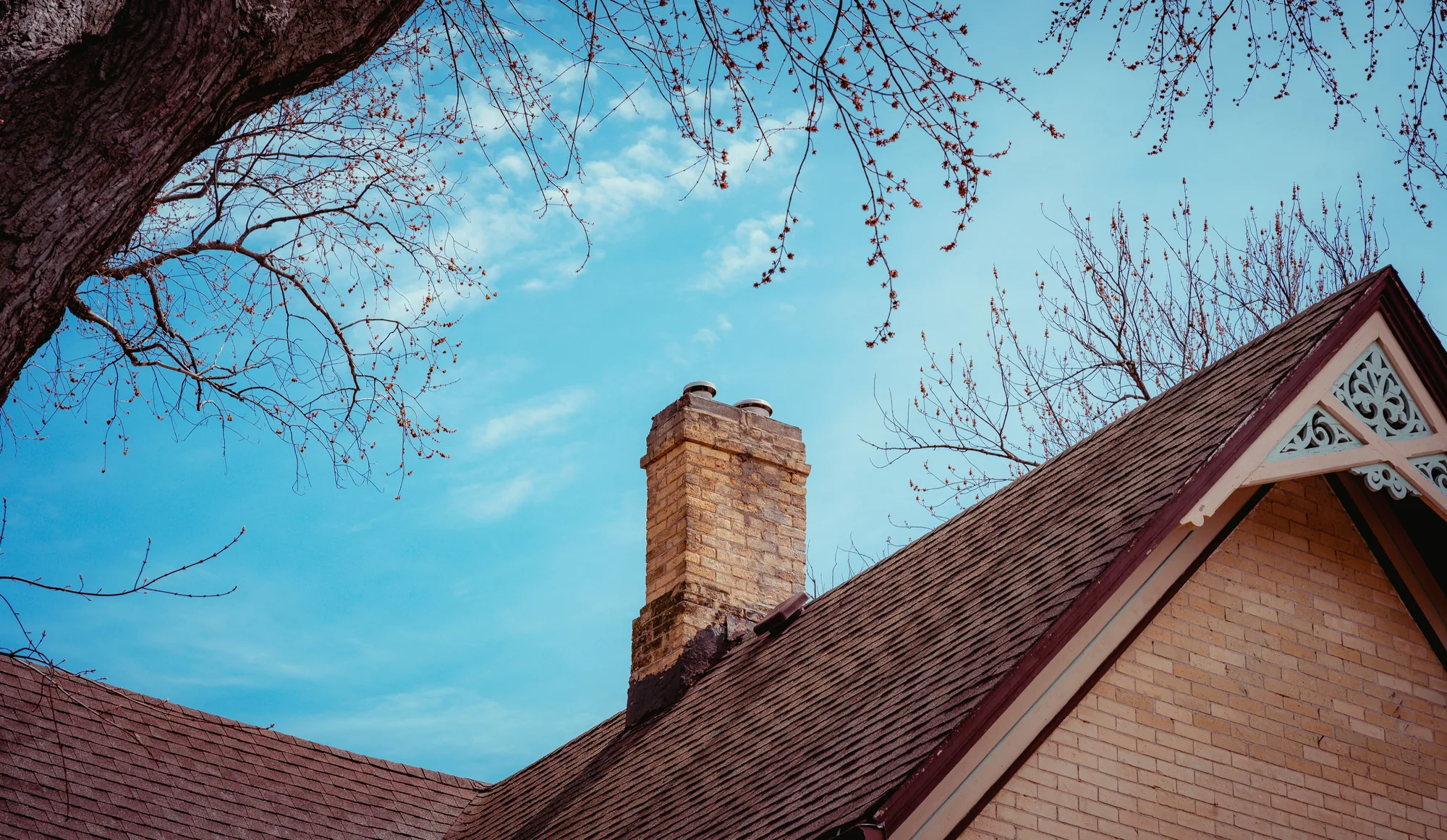
An inspector can only give accurate answers if they understand the property. Have these details ready before you reach out to anyone.
Property basics
- Address and property type: single-family, two- to four-family, townhouse, co-op, or condo.
- Approximate year built and square footage.
- Foundation type if known: full basement, crawlspace, or slab.
- Number of bathrooms, kitchens, and heating zones.
- Outbuildings, a detached garage, a pool, or a barn.
Utilities and systems
- Municipal water and sewer, or a private well and septic system.
- Heating fuel: gas, oil, electric, propane, or a heat pump.
- Any solar panels, generators, or unusual equipment.
Deadlines and concerns
- Your attorney review or inspection contingency deadline.
- Anything that already worries you: a damp basement, an older roof, a recent flip, a seller disclosure item.
- Whether your lender has asked for any specific report, such as a wood-destroying insect report or a well water test.
Sharing this up front lets the inspector quote accurately, plan the right amount of time, and tell you honestly whether the property is a good fit for their experience. It also helps you compare candidates on equal terms, since each one is quoting the same scope. Sellers preparing a pre-listing inspection can use the same list; see pre-listing inspection benefits for sellers.
Licensing and Credentials: Questions 1 to 3
1. Are you licensed in New York, and what is your license number?
New York licenses home inspectors under Article 12-B of the Real Property Law, administered by the NYS Department of State, Division of Licensing Services. Licensees must display their license number on reports and advertising under RPL 444-g. A professional should give you their home inspector license number immediately. Then confirm active status yourself through the Department of State's license lookup. Anyone who hedges, or says a license "does not apply" to a residential inspection of a one- to four-unit home, is a reason to move on.
2. Do you keep the liability coverage New York requires on file?
New York requires licensed home inspectors to keep a certificate of liability coverage on file with the Department of State, at $150,000 per occurrence and $500,000 in the aggregate. Asking the question shows you understand the requirement and gives the inspector a chance to confirm it. Some inspectors carry other types of coverage as well; that is a business choice, not a state requirement, so focus on the liability coverage.
3. What training and certifications do you hold beyond the license?
To qualify for a license, an applicant completes one of two alternative paths, either 140 hours of approved training including 40 hours of supervised field experience, or 100 supervised home inspections, and passes an exam. Beyond that baseline, many inspectors pursue continuing education and professional memberships. InterNACHI (often called NACHI) membership is a voluntary credential with its own training and standards of practice; it is valuable, but it is not the same as an active New York license. Ask what they studied recently and whether it relates to your property. Our article comparing NACHI certification and the NYS license explains the difference in detail, and NYS home inspector license requirements covers the licensing process.
Experience With Your Property: Questions 4 and 5

4. How often do you inspect homes like this one?
New York's housing stock varies enormously, and experience with a specific type of building matters. A pre-war brownstone in Brooklyn, a 1960s raised ranch on Long Island, a balloon-framed farmhouse in the Finger Lakes, and a new townhouse in Saratoga County each fail in different ways. Ask how many similar homes the inspector has inspected recently and in which areas. Good follow-ups:
- "What do you most often find in homes of this age?"
- "Do you regularly inspect in this county or neighborhood?"
- "Have you inspected homes with this foundation or heating type?"
An experienced inspector will answer with specifics: steam radiator pitch and old cast iron drains in pre-war buildings, aluminum branch wiring in some 1960s and 1970s homes, stone foundations and knob-and-tube wiring in older farmhouses. Vague answers are a signal.
5. Do you have experience with this home's specific systems?
Some systems call for particular knowledge or specialist referrals:
- Steam and hot-water boilers, common in older homes across the state.
- Oil heat and fuel tanks, including signs of buried tanks.
- Private wells and septic systems, common outside municipal service areas.
- Rooftop solar, generators, geothermal systems, or heat pumps.
- Flat roofs on rowhouses and additions.
The honest answer is sometimes "I will note it and recommend a specialist." That is fine. A general inspector is not expected to evaluate solar inverters or test septic leach fields. What you want is clarity about what they will evaluate, what they will only observe, and who they would recommend for the rest. See old farmhouse inspection upstate or the Long Island raised ranch guide for property-specific examples.
Scope of the Inspection: Questions 6 and 7

6. What does your standard inspection include, and what does it exclude?
A standard home inspection typically covers the roof, exterior, structure and foundation, electrical, plumbing, heating and cooling, interior, insulation, and ventilation, as far as they are visible and accessible. Ask for the scope in writing, ideally in the pre-inspection agreement, and look for explicit exclusions. Common exclusions include:
- Radon testing and pest inspections, which New York's statutory definition of a home inspection excludes.
- Mold sampling and assessment, which in New York requires a separate NYS Department of Labor Mold Assessor license.
- Well water quality, septic systems, and sewer lines underground.
- Swimming pools, spas, irrigation, and outbuildings, unless added.
- Low-voltage systems such as security and audio.
- Code compliance and permit research.
7. Will you walk the roof and enter the attic and crawlspace?
This question separates thorough inspectors from quick ones. Many defects live in the spaces buyers never see. Ask how the inspector evaluates the roof: walking it when safe, from a ladder at the eaves, with a drone or pole camera, or only from the ground with binoculars. Each method is legitimate in the right conditions, but the report should state which was used.
Ask the same about the attic and crawlspace. Will they enter if access is safe, or view from the hatch? What do they do when insulation covers the ceiling joists or a crawlspace is wet? Good inspectors explain their safety limits clearly and note in the report anything they could not evaluate.
If the answer is "I usually look from the hatch," that may be acceptable for a small attic, but it is worth knowing before you hire, not after you read the report.
Add-On Services: Question 8
8. Which add-on services do you offer, and which do you think this property needs?
A good inspector will ask about the property and recommend only what fits, rather than pushing every add-on. Use this table to frame the conversation.
| Add-on | When it is commonly considered | What to ask |
|---|---|---|
| Radon test | Homes with basements or slab foundations, especially in higher-potential areas | What device and protocol do you use? Short-term tests commonly run at least 48 hours. |
| Wood-destroying insect (WDI) report | Wood-framed or older homes, and some loan programs | Does my loan require one? It may be required for some loans, so confirm with your lender. |
| Mold assessment | Visible growth, musty odors, past water intrusion | Do you hold a NYS Department of Labor Mold Assessor license? It is a separate license. |
| Well water test | Any home on a private well | Which lab, and which contaminants are included? |
| Septic evaluation | Any home on a septic system | Do you perform it or refer to a septic specialist? |
| Sewer camera scope | Older homes on municipal sewer, mature trees | Will I receive the video? |
| Oil tank sweep | Oil heat now or in the past | Do you perform it or refer out? |
On WDI reports specifically: there is no statewide requirement for every purchase, but VA loans call for WDI information in specific New York counties, including the five New York City counties, Nassau, Suffolk, Westchester, Broome, and a group of Hudson Valley and Catskills counties. Our guide to WDI inspections and mortgages has the full list. For radon, see radon testing cost and process.
Fees and the Agreement: Questions 9 and 10
9. How is your fee calculated, and what exactly does it include?
Fees commonly depend on square footage, age, property type, number of units, travel distance, and add-ons. Ask for an itemized written quote that shows the base inspection and each add-on separately, plus any charges for re-inspection, return trips to collect radon devices, or extra travel. Also ask how payment works and when it is due. An itemized quote prevents the uncomfortable discovery on inspection day that something you assumed was included costs extra.
When comparing quotes, compare like for like. A lower base fee that excludes a crawlspace entry or a roof walk is not the same service as a higher fee that includes them. Our guide to home inspection cost in New York explains the factors behind pricing without pretending there is one statewide number.
10. Can I read your pre-inspection agreement before inspection day?
Most inspectors use a written agreement describing the scope, standards of practice followed, exclusions, fee, and terms such as how disputes are handled and any limits on liability. Ask to receive it in advance so you have time to read it, rather than signing on a clipboard in the driveway.
Look for:
- The scope and the standards of practice the inspector follows.
- The list of exclusions.
- Any clause limiting the inspector's liability to the fee paid, and how claims must be raised.
- Who the client is, and whether the report may be shared with your attorney, agent, or lender.
If anything is unclear, ask the inspector or your attorney before you sign. A professional will be comfortable explaining their terms.
On Inspection Day: Questions 11 and 12

11. Can I attend, and how long will the inspection take?
A good inspector welcomes the client. Attending lets you see issues in context, ask questions in real time, learn where shutoffs are, and understand which findings are serious. Some inspectors prefer you join for the final hour and the summary; others are happy to have you follow the whole visit. Ask which they prefer.
For a typical single-family home, the on-site visit commonly runs two to four hours, longer for large, old, or multi-unit properties. If an inspector expects to finish a large older home in a fraction of that time, ask how. Rushing is one of the clearest quality signals. Our articles on how long a home inspection takes and whether you should attend go deeper.
12. What do you need from the seller before you arrive?
Experienced inspectors know what makes an inspection succeed or fail. Their answer typically includes:
- All utilities on and pilot lights lit.
- Clear access to the electrical panel, water heater, heating system, attic hatch, basement, crawlspace, and garage.
- Vacant or winterized homes de-winterized so plumbing can be run.
- Pets secured and occupants aware of the appointment.
- Keys or codes for outbuildings and gates.
Pass this list to your agent so it reaches the seller's side. Blocked access is one of the most common reasons parts of an inspection end up marked "not inspected," and a return visit can eat into a tight deadline.
The Report: Questions 13 and 14
13. Can I see a sample report from a similar property?
A sample inspection report predicts what you will receive better than any sales conversation. Look for:
- A clear summary of significant findings.
- Photos for each finding, with the location identified.
- Specific descriptions, such as "double-tapped breaker at the main panel," rather than vague notes like "some wear observed."
- A recommendation for each issue, including which type of specialist to consult.
- A stated scope and limitations section.
- The inspector's license number.
Be cautious of samples that repeat the same boilerplate section after section with little property-specific detail. That pattern tends to repeat in your own report. Our guide to reading a home inspection report shows what a usable report looks like from the buyer's side.
14. When will I receive the report, and in what format?
New York requires the written report to be delivered within five business days of the inspection. Many inspectors deliver faster, often within 24 to 48 hours, but that is a common practice rather than a guarantee, so ask for their typical turnaround and compare it with your deadline. A digital report with embedded photos is easier to share with your attorney, agent, and contractors than a paper copy.
Ask whether urgent issues are communicated on site. Many inspectors will tell you about significant safety or structural concerns during the walkthrough, which gives you a head start on booking specialists before the written report arrives.
After the Inspection: Questions 15 and 16
15. Will you answer follow-up questions after I read the report?
You will almost certainly have questions once you sit down with the report, your attorney, and any contractor estimates. Ask whether the inspector takes follow-up calls or emails and whether there is any charge. Also ask about re-inspection: if the seller agrees to repairs, some inspectors offer a return visit to check specific items before closing, usually for an additional fee.
An inspector who is easy to reach after the report is worth a great deal. Short conversations often resolve uncertainty that would otherwise end up as a vague, contentious negotiation request.
16. Do you offer repair services, or have any relationship with contractors you recommend?
This is a conflict-of-interest question. An inspector who also sells repair services for problems they find has an incentive to find problems. Professional codes of ethics, including InterNACHI's, restrict inspectors from offering repairs on homes they have inspected. It is reasonable to ask directly, and to ask whether any contractors the inspector recommends pay referral fees.
The same principle applies to referrals. It is common and perfectly fine for an agent to suggest inspectors, but you are the client. You are free to choose your own inspector, and the inspector's duty runs to you.
Questions that reveal professionalism
Beyond the formal list, notice how the inspector answers. Do they explain clearly without jargon? Do they acknowledge limits? Do they ask about your concerns? The tone of a pre-hire call is usually the tone of the report and the walkthrough. If you want to understand what comes next, see our guide to negotiating repairs after a home inspection.
Red Flags When Hiring a Home Inspector
Most inspectors are conscientious professionals. Still, when hiring a home inspector, a few warning signs come up often enough to name. If you hear any of these while working through your questions, slow down and consider other candidates.
Credential red flags
- No license number on the website, quote, or agreement, or reluctance to provide one.
- A license that does not show as active when you check it with the Department of State.
- Presenting a professional membership, such as NACHI, as if it were the state license.
Process red flags
- An unusually short time estimate for a large or older home.
- A blanket policy of not entering attics or crawlspaces, without explanation.
- No written agreement, or one offered only on arrival.
- Promises that sound like guarantees, such as "nothing will be missed."
Report red flags
- No sample report available, or a sample made mostly of boilerplate.
- A turnaround that cannot meet the five-business-day legal deadline or your contract date.
- Reports without photos or specific recommendations.
Relationship red flags
- Offering to perform repairs on problems they find.
- Pressure to add services without explaining why the property needs them.
- Discouraging you from attending or from asking questions.
None of these automatically disqualifies someone, but each deserves a clear explanation. A professional will give one without defensiveness.
The Complete Checklist: All 16 Questions in One Place
Copy this home inspector checklist into your notes before your first call. It covers everything in this guide in the order that makes a short conversation efficient.
- Are you licensed in New York, and what is your license number?
- Do you keep the liability coverage New York requires on file?
- What training and certifications do you hold beyond the license?
- How often do you inspect homes like this one, in this area?
- Do you have experience with this home's specific systems, such as boilers, oil tanks, wells, septic, or solar?
- What does your standard inspection include and exclude?
- Will you walk the roof and enter the attic and crawlspace?
- Which add-ons do you offer, and which does this property need?
- How is your fee calculated, and what does it include?
- Can I read your pre-inspection agreement in advance?
- Can I attend, and how long will the inspection take?
- What do you need from the seller before you arrive?
- Can I see a sample report from a similar property?
- When will I receive the report, and in what format?
- Will you answer follow-up questions after I read the report?
- Do you offer repair services or have relationships with contractors you recommend?
Record the answers side by side for each candidate. The best choice is usually obvious once you compare specifics: license confirmed, relevant experience, clear scope, sensible add-on advice, an itemized quote, a strong sample report, and a turnaround that fits your deadline.
First-time buyers can pair this with our first-time home buyer inspection checklist for the rest of the process.
How Inspecverse Can Help You Find an Inspector
Inspecverse is a free New York directory that connects buyers, sellers, and owners with local inspectors. We do not perform inspections, we do not employ inspectors, and we do not verify licenses, which is why the questions above matter. When you request a free inspection quote, you describe the property and your timeline, our team reviews the request by hand, and we route it to a local NACHI-listed inspector who serves your area. That inspector may then contact you directly.
Make the most of the contact
- Include the property details from the "before you call" list in your request.
- State your deadline clearly.
- When the inspector contacts you, work through the 16 questions and confirm the license number with the Department of State yourself.
- Ask for the itemized quote and the pre-inspection agreement in writing.
You are never obligated to hire anyone who contacts you through our directory. Use the same standards you would apply to any inspector you found on your own.
Whether you are buying in Suffolk County, near Buffalo, or anywhere in between, working through these questions to ask a home inspector before hiring is one of the most valuable hours you will spend on the purchase. When you are ready, submit your request with your property details and deadline, and our team will review it by hand.
Frequently Asked Questions
What is the most important question to ask a home inspector?
Do home inspectors in New York need insurance?
Is a NACHI-certified inspector the same as a licensed inspector?
Should I use the inspector my real estate agent recommends?
How far in advance should I book a home inspection?
Can a home inspector also do repairs on the house?
Next step
Ready to get a New York inspector on your property?
Inspecverse is a free referral directory. Send one short request and we will review it and route it to a local NACHI-listed inspector who serves your area. There is no cost and no obligation to hire.
-
1
Tell us about the property
Address area, property type, and the inspection you need.
-
2
We review your request
A person reads every request and picks a local NACHI-listed inspector.
-
3
The inspector may reach out
You discuss scope, timing, and price with them directly.
Inspecverse does not perform inspections, employ inspectors, or verify licenses. Before hiring, confirm the inspector holds an active New York home inspector license with the NYS Department of State.


