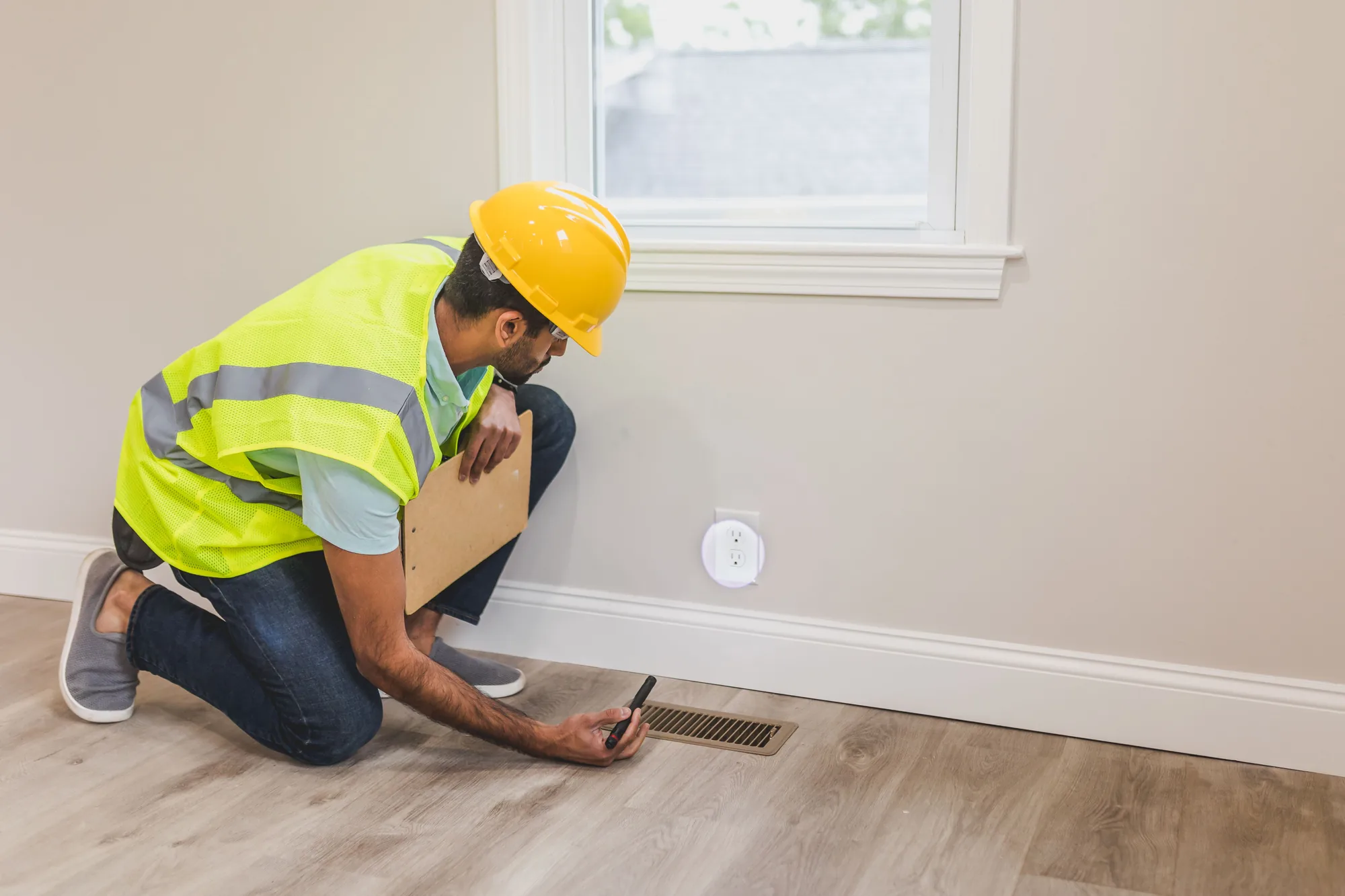
Key Takeaways
- Verify your inspector's New York license through the Department of State; NACHI membership is a voluntary credential, not a substitute.
- Confirm with your attorney whether your deal inspects before contract signing (common downstate) or within a contingency window (common upstate).
- Prepare access and utilities in advance, since winterized or blocked homes produce "not inspected" notes.
- Pay special attention to water management, foundation movement, and the age of the roof, boiler, and water heater.
- Add radon, well, septic, lead, oil tank, or wood-destroying insect testing based on the home's age, utilities, and location.
- Sort report findings by safety, water, major systems, and specialist referrals before deciding what to negotiate.
Buying your first home in New York means learning a long list of unfamiliar steps at once, and the home inspection is the one where you finally get an independent look at what you are actually buying. This first-time home buyer inspection checklist walks you through every stage in order: confirming your inspector is licensed, fitting the inspection into a New York contract timeline, preparing for inspection day, what gets checked system by system, which add-on tests matter in different parts of the state, and how to turn a long report into clear decisions.
It is written for first-time buyers anywhere in the state, whether you are looking at a co-op in Queens, a 1920s two-family in Buffalo, a raised ranch on Long Island, or a farmhouse in the Finger Lakes. New York has a large share of older housing, hard freeze-thaw winters, private wells and septic systems across much of upstate, and radon potential that varies by region. All of that changes what belongs on your checklist compared with a generic national guide.
Use it as a working document: check items off as you go and bring the questions to the inspection. Nothing here replaces advice from your real estate attorney on your specific contract, but it will help you ask better questions and avoid the mistakes that catch many first-time buyers.
In this guide
- Why a First-Time Home Buyer Inspection Checklist Matters
- Step One: Confirm Your Inspector Holds an Active New York License
- Step Two: Fit the Inspection Into Your New York Contract Timeline
- The Week Before: Your Pre-Inspection Prep Checklist
- Exterior, Roof, and Drainage Checklist
- Structure, Foundation, and Basement Checklist
- Electrical, Plumbing, and Heating Checklist
- Attic, Insulation, and Ventilation Checklist
- Interior, Safety, and Environmental Checklist
- Add-On Tests to Consider for New York Properties
- Co-ops, Condos, Townhouses, and Small Multifamily Homes
- Reading the Report: How First-Time Buyers Should Sort Findings
- Mistakes First-Time Buyers Make With the Inspection
- How Inspecverse Can Help You Take the Next Step
- Frequently Asked Questions
Why a First-Time Home Buyer Inspection Checklist Matters
Experienced owners have usually lived through a failed water heater or a wet basement, so they read a report with context. For first-time buyers, the inspection is often the first time anyone explains how a house works as a connected system, and which problems are routine maintenance versus genuinely expensive.
A standard home inspection is a visual, non-invasive evaluation of the readily accessible parts of a property at a single point in time. Under New York Real Property Law section 444-b, a "home inspection" covers residential buildings of one to four units. The inspector evaluates the roof, exterior, structure, basement or crawlspace, attic, electrical, plumbing, heating and cooling, and interior, then documents observations in a written report.
What a home inspection does not do
- It does not guarantee that nothing will fail after you move in. It is a snapshot, not a warranty.
- It does not open walls, lift carpets, or dismantle equipment, so hidden conditions can stay hidden.
- It is not an appraisal of market value and not a municipal code-compliance inspection.
- The statutory definition excludes radon testing, wood-destroying insect inspections, and newly built homes that have never been occupied. Those are separate services.
Knowing those limits is the first item on any first-time buyer's checklist. Within them, the inspection gives you three things you badly need: a documented list of conditions, a sense of which ones are urgent, and leverage at a moment when your deal may still allow you to renegotiate or walk away.
Step One: Confirm Your Inspector Holds an Active New York License
New York regulates home inspectors directly. Licensing falls under Article 12-B of the New York Real Property Law and is administered by the New York State Department of State, Division of Licensing Services. Anyone performing home inspections for compensation in the state needs that license, and you can check an inspector's license status yourself through the Department of State's online license search before you hire anyone.
What the license tells you
- Training and exam: applicants complete either 140 hours of approved coursework that includes 40 hours of supervised field training, or 100 inspections performed under supervision, and must pass a state exam.
- Liability coverage: licensees keep a certificate of liability coverage on file with the state, at $150,000 per occurrence and $500,000 in the aggregate.
- Disclosure: under RPL 444-g, the license number must appear on inspection reports and in advertising. If you cannot find it, ask.
Memberships are a separate question
Many inspectors also belong to InterNACHI or another association. Membership is a voluntary credential with its own standards and continuing education. It can be a useful signal, but it is not the same as an active New York license, so check both.
Questions to ask before you book
- How many homes like this one (age, type, region) have you inspected?
- Can I see a sample report?
- What is included in the base fee, and which add-on tests do you offer or refer out?
- May I attend and walk through the findings with you at the end?
If an inspector offers mold sampling, note that mold assessment in New York requires a separate Mold Assessor license from the NYS Department of Labor. For more on credentials, see our guide to NYS home inspector license requirements.
Step Two: Fit the Inspection Into Your New York Contract Timeline
Timing is where many first-time buyers in New York get caught out, because the order of events differs by region. Your attorney should confirm how your specific deal works, but it helps to know the two common patterns before you make an offer.
The downstate pattern
In New York City, on Long Island, and in much of Westchester and the lower Hudson Valley, buyers commonly complete the inspection after an offer is accepted but before the contract is signed, while the attorneys negotiate the contract. Once you sign and the deposit goes into escrow, there is often no separate inspection contingency left, so the inspection effectively has to be finished first.
The upstate pattern
In many upstate markets, including the Rochester, Buffalo, Syracuse, and Capital Region areas, purchase offers are frequently written on standard forms that include an attorney approval period and an inspection contingency with a set number of days. You sign first and inspect within the window. Practice varies by county and by agreement, so read the clause rather than assuming.
Your timeline checklist
- Shortlist two or three licensed inspectors before you make offers, so you can book the day an offer is accepted.
- Put the inspection deadline, attorney review deadline, and mortgage commitment date on one calendar.
- Allow time for add-ons. Short-term radon tests commonly run at least 48 hours, and water samples go to a lab.
- New York requires the written report within five business days. Many inspectors deliver within 24 to 48 hours, but treat that as a common expectation, not a promise.
- Leave room after the report to get contractor opinions and negotiate.
For a full explanation, read the inspection contingency in NY real estate contracts.
The Week Before: Your Pre-Inspection Prep Checklist

Preparation is the easiest part of the process to overlook, and many "not inspected" notes in a report trace back to a locked door, a blocked hatch, or utilities nobody turned on. Work through this list with your agent in the days before the appointment.
- Confirm the utilities are on. Water, gas or oil, and electricity must be active for the inspector to run fixtures, heating, and the water heater. Vacant homes, especially upstate in winter, are often winterized with the water off and lines drained. Ask whether the seller will de-winterize first.
- Confirm access. The attic hatch, electrical panel, basement, crawlspace entry, garage, and outbuildings should be unlocked and not blocked by stored belongings.
- Request documents: the seller's property condition disclosure, permits for additions or finished basements, roof and boiler service records, oil tank removal paperwork, and septic pumping receipts where relevant.
- Review your showing notes. Write down anything you noticed: a musty basement, a ceiling stain, a soft spot in a floor, a dehumidifier running hard.
- Check flood risk on FEMA's flood maps, particularly near the coast, rivers, or lakes. Our guide to flood zone properties in NY explains why it matters.
- Plan to attend, at minimum for the final walkthrough.
- Watch the weather. Snow cover can limit how much of a roof can be seen, so ask how the inspector will handle it.
Bring a notebook, a flashlight, and shoes you do not mind getting dirty.
Exterior, Roof, and Drainage Checklist
Water is the root of most expensive house problems in New York, and it usually starts outside. When you walk the exterior with your inspector, focus on how water reaches the house and where it goes.
Grading and drainage
- Does the soil slope away from the foundation, or toward it?
- Do gutters run continuously, and do downspouts discharge well away from the walls?
- Are there low spots, puddling, or erosion near the house?
Roof covering, flashing, and chimneys
- Shingle condition: curling, granule loss, cracked or missing tabs, and visible patches.
- Flashing at chimneys, skylights, dormers, and roof-to-wall joints, where most leaks begin.
- Signs of past ice dams along the eaves, a common winter problem across the state.
- Chimney masonry, the crown, and whether an older chimney in use is lined.
Inspectors may walk a roof, view it from a ladder, or use binoculars or a drone, depending on pitch, height, weather, and safety. The report should say how the roof was evaluated. If it was viewed only from the ground, ask whether a roofer should take a closer look. See what gets checked in a roof inspection.
Walls, windows, and decks
- Siding damage, rot at trim and sills, and gaps around windows and doors.
- How the deck attaches to the house, plus railings, stairs, posts, and footings.
Freeze-thaw cycles punish small exterior defects. A gap in caulking that would be minor in a mild climate can admit water that freezes, expands, and widens the gap every winter, so take exterior water findings seriously even when they look small.
Structure, Foundation, and Basement Checklist
Foundations in New York span more than a century of building methods. Nineteenth-century farmhouses and older city row houses often sit on fieldstone or rubble foundations, many mid-century homes have concrete block walls, and later houses commonly have poured concrete or slabs. Each ages differently, so ask your inspector which type you have and what is normal for it.
What to look for together
- Cracks: thin vertical shrinkage cracks in poured concrete are common. Horizontal cracks in block walls, stair-step cracks along mortar joints, or walls that bow inward deserve closer attention and possibly a structural engineer.
- Moisture evidence: water lines on walls, white mineral deposits (efflorescence), rust on appliance legs, damp stored items, and musty odors.
- Clues of a past problem: a freshly painted single wall, new paneling in an otherwise unfinished basement, or a dehumidifier running constantly.
- Sump pumps: whether one exists, whether it runs, and where it discharges.
- Framing: sagging beams, notched joists, damaged sill plates, and posts on questionable supports.
Finished basements and crawlspaces
Drywall, carpet, and paneling hide the foundation, so an inspector can only report what is visible. Ask whether the finished space was permitted, whether there was water before it was finished, and whether below-grade bedrooms have proper egress windows. If there is a crawlspace, ask whether the inspector entered it or viewed it from the access point, because crawlspaces are where moisture and pest activity hide.
Not every crack is a crisis. This part of the checklist separates normal aging from active movement or water entry. For more, see foundation cracks: when to worry and basement moisture and sump pumps in NY.
Electrical, Plumbing, and Heating Checklist
Mechanical systems are where age matters most to your budget. A sound house can still need a new boiler, panel upgrade, and water heater within a few years of each other.
| System | What the inspector typically evaluates | New York items worth asking about |
|---|---|---|
| Electrical | Service size, panel and breakers or fuses, grounding, visible wiring, GFCI protection, a sample of outlets | Knob-and-tube wiring in older homes, aluminum branch wiring from the 1960s and 1970s, fuse panels, amateur basement and attic wiring |
| Plumbing | Supply and drain materials, visible leaks, pressure and drainage at fixtures, water heater age and venting | Galvanized supply pipes and cast-iron drains in older homes, the water service line material, private well and septic systems |
| Heating | Operation under normal controls, visible condition, venting, approximate age | Oil-fired boilers and steam systems, active or abandoned oil tanks, chimney venting of older appliances |
| Cooling | Operation and visible condition when outdoor temperatures allow | Inspectors commonly will not run central air in cold weather because it can damage the compressor |
The question that matters most
For each major system, ask: "About how old is it, and what should I plan for?" Inspectors do not predict exact failure dates, but they can usually tell you whether a water heater or boiler is near the end of a typical service life. That answer lets you build a realistic first-five-years budget, which is exactly what a first-time buyer needs.
When a specialist is recommended
A recommendation for further evaluation by a licensed electrician, plumber, or heating contractor means the issue goes beyond a visual inspection. Follow through before your deadline. Related reading: knob-and-tube wiring in old NY homes and oil tank inspections.
Attic, Insulation, and Ventilation Checklist

The attic tells the story of the roof from the inside, and first-time buyers rarely look there on their own. If it is accessible, it belongs on your checklist.
Signs worth discussing
- Staining on the roof sheathing or rafters around chimneys, vents, and valleys, which can indicate past or present leaks.
- Dark discoloration on the underside of the sheathing, which can point to condensation from poor ventilation or warm, moist air leaking up from the house.
- Bathroom or kitchen fans venting into the attic rather than outdoors, a common and fixable moisture source.
- Ventilation at soffits, ridge, or gables, and whether insulation blocks airflow at the eaves.
- Insulation type and depth. Loose, granular, gray-brown vermiculite in older homes may contain asbestos and should not be disturbed until tested.
- Wiring buried under insulation, including any knob-and-tube still in service.
Access limits
Inspectors will not cross an attic with no safe floor, or where they would compress insulation and risk stepping through a ceiling. Some attics are viewed only from the hatch, and spray-foam attics can hide the roof deck entirely. The report should describe how the attic was accessed.
Why it matters in New York
The attic connects directly to the ice dams and winter heating bills New York homeowners deal with every year. When heat escapes into the attic, snow melts on the upper roof and refreezes at the cold eaves. Improving insulation and air sealing is often a sensible early project.
Interior, Safety, and Environmental Checklist
Inside the living space, the inspector looks for function and safety rather than decor. Walk the rooms with them and focus on anything that could affect your household in the first week you live there.
Interior function
- Windows that open, close, and lock; stuck or broken sashes in older homes.
- Doors that rub or will not latch, which can hint at settling.
- Sloping or springy floors, cracked tile, and ceiling stains below bathrooms.
- Loose balusters, uneven stair risers, and missing handrails.
- Dryer venting to the exterior and visible leaks at kitchen and laundry plumbing.
Life safety
Ask the inspector to point out smoke and carbon monoxide alarms and any that are missing or past their service life. New York generally requires carbon monoxide alarms in homes with fuel-burning appliances or an attached garage; see carbon monoxide detector requirements in NY.
Environmental concerns that need separate testing
- Lead paint: homes built before 1978 may contain lead-based paint. Federal rules require sellers of most pre-1978 homes to disclose known lead-based paint and hazards and to give buyers a 10-day opportunity to arrange a lead inspection or risk assessment, unless the parties agree in writing to a different period or the buyer waives it.
- Asbestos: older pipe insulation, boiler wrap, floor tiles, and vermiculite may contain it. An inspector can note suspect materials, but only lab testing confirms it.
- Mold: a home inspector can report visible staining, moisture, and odors. Sampling and a formal assessment require a separately licensed NYS Mold Assessor.
Add-On Tests to Consider for New York Properties
The general inspection is the foundation, but in New York the add-on inspection tests are often where first-time buyers find the most important information. Which ones you need depends on the home's age, utilities, and location.
| Test | When it is worth considering | Timing and notes |
|---|---|---|
| Radon | Any home, especially with a basement or slab on soil; potential varies by region | Short-term tests commonly run at least 48 hours depending on device and protocol |
| Well water | Homes on a private well, common in rural and exurban areas | Samples go to a lab; ask which contaminants are covered |
| Septic system | Homes not connected to municipal sewer | Usually performed by a septic professional |
| Wood-destroying insects | Wood in contact with soil, older framing, or a loan program that asks for it | Not a statewide lender rule; may be required for some loans, so confirm with your lender |
| Oil tank search | Homes with past or present oil heat | Abandoned buried tanks can leak and are costly to remove |
| Sewer line camera | Older homes with mature trees or older clay or cast-iron lines | Shows roots, breaks, and sags the general inspection cannot see |
| Lead paint | Homes built before 1978 | Performed by a certified lead inspector or risk assessor |
How to decide
Start with utilities: well and septic testing are close to essential when those systems are present, because the general inspection only covers what is visible. Then age: pre-1978 homes raise lead and asbestos questions, and oil heat history raises tank questions. Then location: radon potential is higher in parts of upstate New York, but the only way to know a specific home's level is to test it. See our guides to radon zones in New York State and well water testing.
Ask each inspector which tests they perform and which they refer out, and schedule everything inside one window. If you want help finding a local inspector, you can request a free inspection quote and list the add-ons you are considering.
Co-ops, Condos, Townhouses, and Small Multifamily Homes

Many first-time buyers in New York City and the inner suburbs buy into a building rather than a freestanding house. The checklist still applies, but the split between your responsibility and the building's changes what you inspect and what you review on paper.
Co-op and condo units
A unit inspection typically focuses on what you will control: in-unit electrical, plumbing fixtures and visible piping, windows, through-wall or fan coil heating and cooling units, appliances, and signs of leaks from above or from the facade. The roof, boilers, risers, elevators, and facade usually belong to the co-op corporation or condo association, so you investigate them through documents: the offering plan, financial statements, board minutes, reserves, and any special assessments. In New York City, ask whether the building has open facade repair work under the city's facade inspection program. Our guide to co-op vs. condo inspections in NYC explains the split.
Townhouses
Townhouses share walls and sometimes roofs. Ask who maintains the roof and exterior and whether the association covers drainage and paving.
Two- to four-family homes
Living in one unit of a small multifamily is a common first purchase in Brooklyn, Queens, Buffalo, Rochester, and Albany. These fall within New York's one-to-four-unit home inspection definition, but they take longer because every unit has its own systems. Make sure the inspector evaluates each unit, each heating system, each panel, and every exit path, and confirms smoke and carbon monoxide alarms in every unit. Ask your attorney whether the legal unit count matches how the building is used.
Reading the Report: How First-Time Buyers Should Sort Findings
Your report may run dozens of pages with photographs, and first-time buyers often panic at the length. A long report is normal; every house generates findings, including new ones. The skill is sorting them.
A simple triage order
- Safety hazards: exposed wiring, missing carbon monoxide alarms, gas odors, unsafe stairs, faulty heating venting.
- Active water problems: roof leaks, foundation seepage, plumbing leaks. Water damage grows over time.
- Major systems near end of life: roof covering, boiler or furnace, water heater, electrical service. These drive your budget.
- Recommendations for further evaluation by an electrician, structural engineer, roofer, or septic professional. Get those opinions before your deadline.
- Maintenance items such as caulking, gutter cleaning, and minor grading.
- Cosmetic items, which are useful to know but rarely worth negotiating.
From findings to decisions
Share the full report with your attorney promptly. For items in the first four categories, gather contractor estimates where you can, then decide whether to ask for a price reduction, a closing credit, seller-completed repairs, or, if the problems are serious and your contract allows, to withdraw. Credits are often simpler than seller repairs because you control the quality of the work.
Check that the report includes the inspector's license number and clearly states what was not accessible or not tested. See how to read a home inspection report and negotiating repairs after a home inspection in NY.
Mistakes First-Time Buyers Make With the Inspection
The same mistakes show up again and again among first-time buyers in New York, and each one is avoidable.
- Waiving the inspection to win a bidding war. It removes your best chance to learn about the house before you are committed. If you are tempted, talk through the risk with your attorney first.
- Choosing on price alone. The cheapest inspection is expensive if it misses a failing roof. Compare license status, experience with your type of home, and sample reports.
- Booking too late. Good inspectors fill their calendars in spring and early summer, so shortlist them before you make offers.
- Skipping the walkthrough. Being present lets you see issues in context. Our guide on whether to attend your home inspection explains why.
- Ignoring "further evaluation" notes. Follow up with the specialist before your deadline, not after closing.
- Treating every item as a dealbreaker, or none of them. Sort the findings first.
- Relying on the seller's old inspection, which was prepared for someone else at a different time.
How Inspecverse Can Help You Take the Next Step
Finding an inspector quickly, right after an offer is accepted, is one of the most stressful parts of buying a first home. Inspecverse is a free New York directory designed to make that step easier.
What we do, and what we do not do
Inspecverse does not perform inspections and does not employ inspectors. When you submit a request, our team reviews it and passes it to a local NACHI-listed inspector in our directory who serves your area. That inspector may then contact you directly to discuss scope, scheduling, and pricing. Using the directory is free, and you are under no obligation to hire anyone.
How to make your request useful
- The property's town or neighborhood and county, for example a home in Monroe County or a co-op in Queens.
- The property type: single-family, co-op or condo unit, townhouse, or two- to four-family.
- Approximate age, and whether it has a well, septic system, or oil heat.
- Your contract deadline, so timing is clear from the start.
- Any add-ons you are considering, such as radon or well water testing.
Before you hire anyone, confirm their New York license yourself through the Department of State and ask the questions in Step One. That check takes only a few minutes.
When you are ready, submit a free inspection request and keep this first-time home buyer inspection checklist close. A buyer with a licensed inspector, a clear timeline, and the right add-on tests is in a far stronger position than one who treats the inspection as a formality.
Frequently Asked Questions
What should be on a first-time home buyer inspection checklist in New York?
How do I check if a home inspector is licensed in New York?
Does a standard home inspection include radon or termite testing?
When will I get my home inspection report?
Should a first-time buyer get an inspection on a co-op or condo?
Can I negotiate after the home inspection as a first-time buyer?
Next step
Ready to get a New York inspector on your property?
Inspecverse is a free referral directory. Send one short request and we will review it and route it to a local NACHI-listed inspector who serves your area. There is no cost and no obligation to hire.
-
1
Tell us about the property
Address area, property type, and the inspection you need.
-
2
We review your request
A person reads every request and picks a local NACHI-listed inspector.
-
3
The inspector may reach out
You discuss scope, timing, and price with them directly.
Inspecverse does not perform inspections, employ inspectors, or verify licenses. Before hiring, confirm the inspector holds an active New York home inspector license with the NYS Department of State.