New York City · Staten Island
Local Home Inspection in Richmond County, NY
One short form connects buyers, sellers and owners in Richmond County with a NACHI-certified inspector who lists the area. It is free and there is no obligation. Whether you searched for New Construction Home Inspection Staten Island NY or simply need a qualified inspector near you, you are in the right place.
- On city pages
- 12
- City pages
- 1
- To request
- Free
Richmond County — known to nearly everyone simply as Staten Island — is New York City's most suburban borough, and that distinct character shapes what a home inspection in this county actually needs to cover. From pre-war Victorians clustered near the North Shore's historic neighborhoods to the raised ranches and split-levels that define much of Mid-Island's postwar development, to the newer construction pushing into the South Shore, Richmond County's housing stock spans more architectural eras and building styles than almost anywhere else in the five boroughs. A good inspection has to be able to speak all of those languages.
This directory connects Staten Island homeowners, buyers, and sellers with NACHI-certified home inspectors who already know this terrain — 12 of them are listed across the county, with the heaviest concentration serving Staten Island itself. This page isn't a sales pitch for any one inspector; it's a practical, locally grounded resource on what to expect from a Richmond County home inspection, what this borough's particular mix of building eras and coastal geography means for your inspection checklist, and how New York State's licensing rules protect you as a buyer or seller. When you're ready to talk to someone, the request form on this page will route your request to a local NACHI-certified inspector — this section is about making sure you walk into that conversation already informed.
What We Do for Home Buyers and Sellers in Richmond County
Our job is the step before the inspection. You tell us what you need, whether that is a pre-purchase home inspection in Richmond County, NY, a check before you list, or a commercial property inspection, and we send your request to an inspector who serves Richmond County. That inspector may then contact you with a quote and, if you go ahead, schedule the visit with you.
We do not perform inspections, sell repairs, or work for either side of the deal. The directory exists so that finding a qualified home inspector near Richmond County takes one form instead of an afternoon of phone calls. Inspectors serving Richmond County are currently listed on our Staten Island page, and requests from anywhere in the county are welcome.
Why Choose Inspecverse for a Home Inspection in Richmond County?
Buyers and owners in Richmond County, NY have plenty of ways to find an inspector. Here is why many start with us:
- Local by design. Requests for Richmond County go to inspectors who list this area, not to a national call center.
- One form, both tracks. Residential and commercial requests use the same short form, and you only answer the questions that apply to your property.
- Credentials up front. Inspectors on this page are shown by name and InterNACHI credential, so you can see who serves Richmond County before you ask for a quote.
- Free, no obligation. Submitting a request costs nothing and does not commit you to hiring anyone.
- Plain-English New York guidance. We explain how New York licensing works so you can check any inspector yourself.
Ready when you are: request a free quote.
What Makes Us Better Than a Generic "Home Inspector Near Me" Search
A generic search for a home inspector near Richmond County returns ads, national lead sites and inspectors who may be an hour away. Inspecverse is built only for New York and organized county by county and city by city, so the inspectors listed for Richmond County are the ones who say they serve it.
- New York only. Every page, including this one, is written around New York housing and New York inspection rules.
- Local pages, real detail. The guide below covers housing, climate and systems that matter in Richmond County specifically.
- Residential and commercial. One directory for a starter home, a rental building or a storefront.
- Straight talk. We explain what to check yourself instead of promising outcomes we cannot control.
What Inspectors Look for in Richmond County Homes
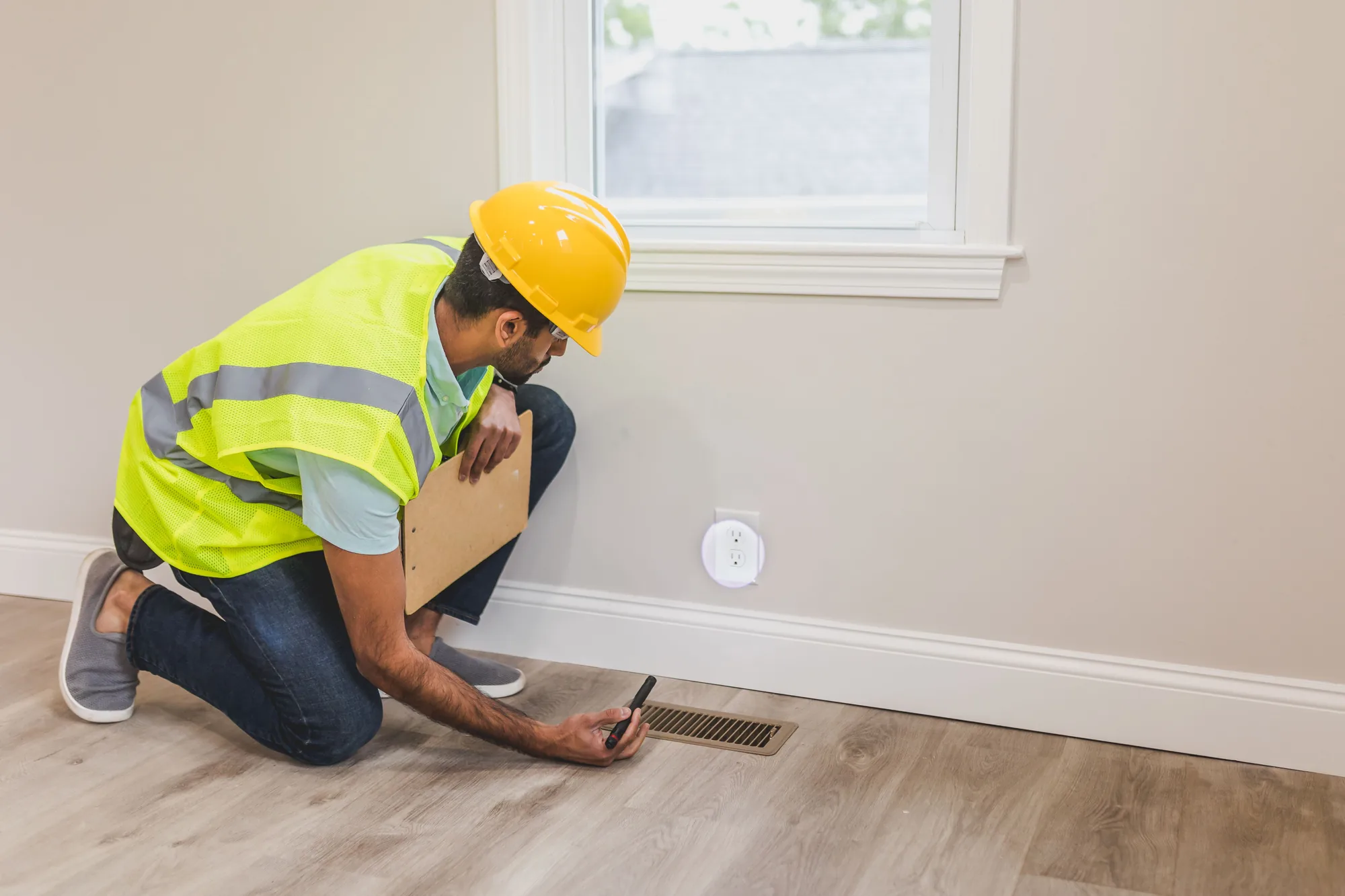
City properties age differently from suburban houses. Expect your inspector to look closely at the boiler or furnace, the electrical service and panel, water lines, the roof and any visible signs of water entry in basements and top floors.
Multi-family buildings add more units, more systems and often more deferred maintenance, so tell us the unit count in your request so the inspector can plan the time a proper local home inspection in Richmond County needs.
Inspection Services Available in Richmond County
Inspectors who serve Richmond County offer different mixes of services, so tell us what you need in your request. Commonly requested services include:
- Pre-purchase home inspection for buyers under contract.
- Pre-listing inspection for sellers who want no surprises.
- New construction and phase inspections before drywall or before closing.
- Radon testing, commonly run for at least 48 hours.
- Well water and septic evaluations for properties off municipal systems.
- Wood-destroying insect (WDI) reports when a lender or buyer asks for one.
- Commercial property inspections for offices, retail and multi-family buildings.
Not every inspector offers every service; the one you are routed to will confirm what is included in your quote.
What to Consider Before You Book a Home Inspection in Richmond County
- An active New York license. Home inspectors in New York must be licensed by the Department of State under Article 12-B of the Real Property Law. Ask for the license number and look it up before the inspection.
- Liability insurance. New York requires licensed home inspectors to carry general liability insurance of at least $150,000 per occurrence and $500,000 in the aggregate. Ask for the certificate.
- A sample report. A good report is organized, photo-documented and clear about what is a safety issue, what needs repair and what is routine maintenance.
- Scope and add-ons. Radon, well water, septic and wood-destroying insect checks are often separate services. Mold assessment in New York requires a separate Mold Assessor license.
- Timing. Line up your home inspection in Richmond County, NY early in your contingency window so there is time to bring in a specialist if the inspector recommends one.
Need a home inspection near Richmond County?
Residential or commercial. Free to request, no obligation.
New York Home Inspection Rules Richmond County Buyers Should Know
New York is one of the states that licenses home inspectors. Under Article 12-B of the Real Property Law, anyone performing a home inspection for pay must hold a license from the Department of State. Licensed inspectors must also carry general liability insurance of at least $150,000 per occurrence and $500,000 in the aggregate.
Licensing does not cover every specialty. Mold assessment needs a separate New York Mold Assessor license, and some tests, such as lab water analysis, are handled by others. Before your home inspection in Richmond County, NY, ask for the license number and confirm it with the Department of State.
Getting the Most From Your Inspection Near Richmond County
If you are the buyer, ask your agent to confirm access with the sellers and to make sure utilities are on. If you are the seller, clear the way to the attic, basement, panel and mechanical equipment.
Attend if you can. Seeing an issue in person, with the inspector explaining it, makes the report much easier to understand when you sit down to decide next steps after your home inspection in Richmond County, NY.
Home Inspection Near Richmond County: Communities We Cover
This page is your starting point for a home inspection near Richmond County anywhere in Richmond County, NY. It includes our dedicated pages for Staten Island, plus every other town and village in the county. If your town is not named, send a request with your address and we will check which listed inspectors serve it.
Richmond County is part of the New York City region, so you will also find links to nearby counties at the bottom of this page if your property sits close to a county line.
Pricing Your Richmond County Inspection: What Moves the Number
Quotes for a home inspection in Richmond County, NY vary with square footage, age, the number of units and any add-on testing you request. A century-old house with a full basement and a detached garage will take longer than a newer condo, and that shows up in the quote.
Ask each inspector exactly what their quote includes. A slightly higher price that includes radon testing or a sewer scope may be better value than a bare-bones inspection.
Six Smart Questions Before You Hire Near Richmond County
Ask for the license number, a sample report and proof of insurance. Ask how long the inspection will take and when the report will arrive. Ask what is not included, especially radon, well, septic, sewer lines and mold, and how they handle items that need a specialist.
Finally, ask about local experience. Older housing, private wells and harsh winters all show up in New York City, and an inspector who knows Richmond County will know where to look.
Local guide
The Richmond County Home Inspection Guide
Housing, climate, systems and New York rules that shape a home inspection in Richmond County, written for buyers and sellers.
Understanding Richmond County's Unique Housing Landscape
Richmond County is unusual among New York's 62 counties in that it is both a county and, in its entirety, a single New York City borough — Staten Island. That dual identity matters for home inspections because it means Staten Island properties sit under New York City's building and housing codes and inspection norms, while physically and architecturally the borough feels more like a suburban county than the dense urban fabric most people associate with NYC. The result is a housing stock shaped by over three centuries of settlement, from colonial-era farmhouses in the earliest Dutch and English settlement areas to the aggressive single-family suburban build-out that defined the decades after the Verrazzano-Narrows Bridge opened in 1964 and connected the island directly to Brooklyn for the first time.
For a prospective buyer or a seller preparing to list, that layered history means two houses on the same street can have completely different inspection priorities. A home near the historic North Shore might need careful evaluation of original masonry, old wiring methods, and settling patterns in a foundation that's a century or more old. A raised ranch a few miles south, built during the 1960s-80s suburban expansion, has an entirely different set of systems, ages, and likely wear patterns. A home inspector working across Richmond County needs real familiarity with both worlds — which is part of why matching the right inspector to the right property type matters as much here as the inspector's general qualifications.
Common Building Types and Architectural Eras in Richmond County
Staten Island's building stock breaks down into a few recognizable eras and types that any buyer or seller benefits from recognizing before an inspection even begins. Each era tends to carry its own predictable set of inspection considerations, not because every house in that era has problems, but because materials, codes, and construction practices shifted meaningfully from decade to decade.
Pre-War and Victorian-Era Homes (North Shore and Historic Districts)
Staten Island's North Shore, including neighborhoods around St. George, New Brighton, and parts of the historic Richmond Town area, retains a meaningful concentration of homes built before World War II, some dating to the Victorian era or earlier. These properties often feature original wood-frame or masonry construction, decorative detailing, and — because they predate most modern building codes — plumbing, electrical, and structural systems that have typically been updated piecemeal over many decades rather than built to a single unified standard. An inspection on a home this old benefits from an inspector experienced in reading the layered history of updates: original knob-and-tube wiring remnants, mixed-generation plumbing materials, and foundation settling that's been stable for a century versus settling that's actively progressing are all things a buyer needs distinguished clearly.
Raised Ranches, Split-Levels, and Mid-Century Suburban Construction
The decades following the Verrazzano-Narrows Bridge's 1964 opening triggered rapid suburban-style residential development across Mid-Island and parts of the South Shore, producing large numbers of raised ranches, split-level homes, and standard single-story and two-story ranch houses. These homes are now roughly 50-70 years old in many cases, which places their original mechanical systems — heating, electrical panels, and plumbing — well past typical service life even if they've received no major work. A thorough inspection of this housing type pays particular attention to whether major systems were ever actually replaced versus simply maintained, since a well-kept original system from this era can still be nearing the end of its realistic lifespan.
Newer Construction and South Shore Development
Staten Island's South Shore, including areas like Tottenville and the broader Annadale-Eltingville-Great Kills corridor, has seen more recent construction phases, including homes built to more modern energy codes, updated flood-resilience standards following Hurricane Sandy, and contemporary electrical and HVAC systems. These newer homes generally present fewer age-related system concerns, but inspections here often focus more heavily on construction quality control — proper grading and drainage around the foundation, code-compliant egress and fire separation in multi-family or accessory configurations, and verification that any flood-zone-related construction requirements were actually followed during the build.
Flood Zones and Coastal Exposure: What Hurricane Sandy Taught Staten Island
Richmond County's relationship with coastal flooding is not theoretical — it's one of the best-documented aspects of the borough's recent history. Staten Island's East Shore, including neighborhoods like Oakwood Beach, Ocean Breeze, and parts of Midland Beach, along with low-lying sections of the South Shore, experienced severe storm surge and flood damage during Hurricane Sandy in October 2012. The aftermath led to a state-run voluntary buyout program in some of the hardest-hit East Shore areas, permanently removing certain blocks from residential use, while many surrounding homes were rebuilt or elevated to meet updated flood-resilience standards.
For today's buyers and sellers, this history translates into very practical inspection and due-diligence priorities. A property's FEMA flood-zone designation affects not just flood insurance costs but often the scope of what an inspector should specifically check: foundation and crawlspace moisture history, the condition and placement of mechanical equipment (whether it's been relocated above historical flood lines), sump pump and drainage system function, and any visible evidence of past water intrusion that a seller's disclosure might not fully capture. This doesn't mean every Staten Island property carries flood risk — plenty of Mid-Island and inland South Shore homes sit well outside flood-prone zones — but it does mean flood-zone status is a question worth asking directly and confirming independently through official flood maps rather than assuming based on general borough reputation alone.
Basement and Foundation Types Common to Richmond County Homes
Foundation type across Richmond County varies meaningfully by era and location, and each type carries its own inspection focus points. Older North Shore homes frequently sit on full masonry or poured foundations with traditional basements, which after a century or more can show settling, efflorescence, or water-management issues that need careful distinguishing between cosmetic and structural concern. Mid-century raised ranches and split-levels, by design, often incorporate a partially below-grade level that functions as both foundation and living or garage space — a configuration that benefits from close inspection of waterproofing, since these partial-basement levels are more exposed to moisture intrusion than a fully below-grade basement would be.
In flood-exposed coastal sections, particularly homes rebuilt or elevated after Hurricane Sandy, you'll also encounter crawlspace or pier-and-elevated construction designed specifically to let storm surge pass beneath the living space rather than through it. These configurations trade traditional basement storage and mechanical space for flood resilience, and an inspector should be checking that the elevation and venting were executed correctly rather than simply noting the home is elevated and moving on.
Electrical, Plumbing, and the Lead Paint and Asbestos Question
Home age is the single biggest driver of electrical and plumbing inspection priorities in Richmond County, precisely because the borough's housing stock spans so many decades. Homes built before 1978 — a meaningful share of Staten Island's older North Shore and historic-district inventory — may contain lead-based paint, since 1978 is the year the federal government banned lead paint for residential use nationwide. This is a general fact about housing of that era everywhere in the country, not a Staten-Island-specific statistic, but it applies directly given how much pre-1978 housing stock the borough retains. Many of these same older homes may also contain asbestos in certain insulation materials, older flooring products, or pipe wrap that was standard practice in mid-20th-century construction.
A general home inspection typically identifies visible areas of concern for both lead paint and asbestos-containing materials, but specialized testing for either is usually a separate, dedicated service rather than something bundled automatically into a standard inspection — worth asking about directly if you're buying or renovating an older property. On the plumbing and electrical side, older homes frequently show a layered history of partial upgrades: original cloth-insulated or knob-and-tube wiring remnants coexisting with newer circuits, or galvanized and copper plumbing sections meeting in ways that can create both performance and safety questions. New York State requires licensed inspectors to evaluate these systems' visible condition and functionality as part of a standard inspection, which makes the inspection report one of the most useful documents a buyer gets before committing to an older Staten Island property.
Radon Considerations for Richmond County Properties
Radon potential is not uniform across New York State — it varies significantly by local geology, and different counties and regions carry genuinely different baseline concerns depending on underlying rock and soil composition. Rather than asserting a specific radon risk level for Richmond County, which isn't something that can be responsibly generalized at the county level without current, address-specific testing data, the more useful guidance for Staten Island homeowners and buyers is this: radon is a documented concern in parts of New York State generally, and radon levels can vary meaningfully from one house to another even on the same street, depending on foundation type, basement ventilation, and how directly the home's lower level contacts the soil.
Because of that house-by-house variability, a short-term or long-term radon test is a reasonable addition to any home inspection regardless of which part of the county a property sits in, and it's a relatively low-cost way to rule the concern out entirely if a test comes back clean. If you're buying an older North Shore home with a traditional basement versus a newer elevated South Shore property with a crawlspace, your actual exposure pathway differs enough that it's worth discussing directly with your inspector rather than relying on a borough-wide assumption in either direction.
Water and Sewer Infrastructure Across the Borough
The overwhelming majority of developed residential areas across Richmond County are served by New York City's municipal water and sewer systems, which is consistent with Staten Island's status as a full NYC borough rather than a separate rural or exurban jurisdiction. This matters for inspections because it shifts the typical plumbing-system focus away from well-water quality and septic-tank function — concerns that dominate inspections in truly rural upstate counties — and toward municipal connection condition, sewer lateral integrity, and water pressure and supply-line condition within the home itself.
That said, Staten Island does have some pockets, particularly in historically rural or more isolated sections that developed before full municipal infrastructure reached them, where private septic systems or older cesspools have existed. If you're purchasing a property in one of these less-typical areas, or an older home where the seller's disclosure is vague about the waste system, it's worth confirming directly rather than assuming municipal service applies simply because the property sits within New York City limits. A sewer lateral scope — a camera inspection of the pipe connecting the house to the municipal main — is a worthwhile add-on service for older homes generally, since lateral deterioration is a common and expensive-to-discover-late issue independent of whether the home is on a well or municipal system.
HVAC and Heating System Age Typical for Staten Island Homes
Heating and cooling system age in Richmond County tracks closely with the borough's housing-construction eras. Mid-century raised ranches and split-levels built during the 1960s-80s suburban boom often retain original or first-generation-replacement heating systems that are now well past typical equipment lifespans, even in well-maintained homes, simply due to age. Oil heat remains present in some of the borough's older housing stock, a legacy of an era when oil delivery was the dominant heating fuel across much of the Northeast, and homes with oil heat warrant specific inspection attention to tank condition — particularly for older underground oil tanks, which can represent a significant and costly environmental liability if they've leaked undetected over the years.
Newer South Shore construction and homes that have undergone more recent renovations are more likely to show updated gas-fired systems, central air conditioning, or in some cases newer heat-pump technology, generally presenting fewer age-related concerns but still benefiting from standard function and safety checks. Across all eras, an inspector should be verifying not just whether a system currently runs, but realistically how much useful service life remains — a distinction that matters enormously for a buyer's near-term budgeting.
The Buyer's Inspection Process in Richmond County, Step by Step
For most Staten Island home purchases, the inspection process follows a fairly standard sequence, though the specific timing and contingencies depend on your purchase contract. After an offer is accepted, buyers typically have a defined window — often specified directly in the contract — to schedule and complete a general home inspection, along with any specialized add-on services like radon testing, sewer-line scoping, or pest/wood-destroying-organism inspection that the property's age or type might warrant.
Scheduling and What to Expect On-Site
A general home inspection typically takes a few hours on-site depending on the home's size and complexity, and buyers are strongly encouraged to attend in person if at all possible. Walking the property alongside your inspector, rather than only reading the written report afterward, gives you the chance to ask follow-up questions in real time, see the actual condition of a questionable area firsthand, and get a plain-language explanation of what findings actually mean for your specific situation — information that's often harder to extract fully from a written report alone.
Reviewing the Report and Negotiating Repairs
After the inspection, you'll receive a written report detailing the inspector's findings, typically organized by system or area of the home. Buyers generally use this report to decide whether to proceed with the purchase as-is, request specific repairs or credits from the seller, or in some cases walk away from the deal if the inspection contingency in the contract allows it and the findings are serious enough. This negotiation phase is where having a clear, well-organized report from an experienced inspector pays off most directly — vague or poorly documented findings make it much harder to negotiate effectively with a seller.
New York State Home Inspector Licensing: What It Actually Requires
New York State requires individuals who perform home inspections for compensation to hold a license issued through the Department of State's Division of Licensing Services. This licensing framework exists specifically to establish a baseline of training, competency, and accountability for anyone performing paid home inspections anywhere in the state, Richmond County included. Becoming licensed generally involves completing state-approved coursework covering the systems and components inspectors are expected to evaluate, passing a licensing examination, and then maintaining the license through the state's ongoing renewal and continuing-education requirements.
This state licensing requirement is separate from, though often complementary to, additional professional certifications an inspector might pursue — such as certification through InterNACHI (the International Association of Certified Home Inspectors), which maintains its own training, examination, and continuing-education standards on top of whatever a given state requires. When you see a NACHI-certified inspector listed in this directory, that credential reflects their standing with that professional association specifically, in addition to whatever New York State licensing they're required to hold to legally perform paid inspections in this state.
How to Choose the Right Home Inspector in Richmond County
Choosing a home inspector in Richmond County benefits from thinking about the specific property type you're dealing with, not just general inspector reputation. An inspector with deep experience in older North Shore Victorians brings genuinely different pattern-recognition than one who's spent years inspecting mid-century South Shore raised ranches — both can be excellent, but asking directly about relevant experience for your specific property type is a reasonable and useful question.
Beyond property-type experience, a few practical steps help separate a strong inspector from a merely adequate one. Ask to see a sample inspection report before hiring, so you know exactly how findings will be documented and communicated — a clear, well-organized report matters enormously if you end up negotiating repairs with a seller. Confirm what's included in the base inspection fee versus what costs extra, since services like radon testing, sewer-line camera scoping, and wood-destroying-organism inspections are frequently offered as add-ons rather than bundled automatically. Finally, confirm the inspector is comfortable with you attending the inspection in person and walking the property together — an inspector who welcomes your presence and explains findings in plain language as you go is generally a better fit than one who treats the inspection as a closed-door process you only see the results of afterward.

Typical Home Inspection Costs in Richmond County
Home inspection costs in Richmond County, like elsewhere in the greater New York City area, generally scale with the home's square footage, age, and system complexity, along with whatever specialized add-on services you choose to include. As a general planning estimate for 2025-2026, buyers in this market commonly budget a cost range that reflects a standard single-family inspection as the baseline, with larger or older homes, multi-family configurations, and add-on services like radon testing or sewer-line scoping adding incrementally to that base figure.
These figures should be treated strictly as broad estimates for planning purposes, not as quotes — actual pricing depends on the specific inspector, property size and age, and which services you select, and the inspectors listed in this directory can give you an accurate, property-specific quote directly. It's worth budgeting for add-on services separately rather than assuming they're automatically bundled into a base price, since radon testing, sewer scoping, and pest inspections are frequently priced as optional extras precisely because not every buyer needs or wants all of them.
Closing Timeline Considerations for Staten Island Purchases
The home inspection is one piece of a broader closing timeline that also involves mortgage underwriting, title search and insurance, and in many New York transactions, attorney review of the contract — New York is one of the states where attorney involvement in residential closings is standard practice, which adds a layer to the timeline beyond what buyers in some other states might expect. Scheduling your inspection promptly after an accepted offer, ideally within whatever window your contract specifies, helps avoid the inspection becoming a bottleneck that delays the rest of the closing process.
If the inspection surfaces significant findings that require negotiation, repair, or further specialized evaluation — a suspected underground oil tank needing further investigation, or flood-zone documentation needing clarification, for instance — build realistic time into your closing timeline for that negotiation to play out. Rushing this step to protect a closing date is one of the more common ways buyers end up accepting risk they didn't need to accept; a few extra days spent getting a clear answer on a real finding is almost always worth more than the schedule pressure saved by skipping it.
Staten Island: The County's Primary Hub for Certified Inspectors
Staten Island itself represents the overwhelming concentration of certified home inspection activity within Richmond County, with 12 NACHI-certified inspectors listed serving the area — effectively the entirety of this county's certified inspector presence, which reflects both the borough's population density and its position as the sole municipality that makes up Richmond County in its entirety.
Because Richmond County and Staten Island are coextensive, inspectors serving "Staten Island" are, by definition, serving the whole county — there isn't a separate set of towns or villages outside Staten Island within Richmond County the way you'd find in many other New York counties with multiple incorporated municipalities. This makes the inspector search process somewhat more straightforward for Richmond County buyers and sellers than in counties split across many smaller towns: wherever on the island your property sits, from the North Shore to the South Shore, the same pool of certified inspectors listed in this directory is positioned to serve you, though as covered above, it's still worth matching an inspector's specific experience to your property's era and type.
What North Shore Homeowners Should Know Before Inspection
North Shore neighborhoods — including areas like St. George, New Brighton, and the historic district around Richmond Town — hold Staten Island's deepest concentration of pre-war and Victorian-era housing stock. If you own or are buying property here, the inspection priorities skew toward age-related system evaluation: original masonry and foundation condition after a century or more of settling, layered electrical and plumbing histories that may include multiple generations of partial upgrades, and the lead-paint and asbestos considerations that come with genuinely older construction. This is also the part of the county where an inspector's experience with historic-home quirks — architectural details, older construction methods, and the specific ways century-old houses age — pays off most directly, since these homes simply don't behave like newer construction when something starts to go wrong.
What Mid-Island and South Shore Buyers Should Prioritize
Mid-Island neighborhoods and much of the South Shore corridor — including the broader area around Great Kills, Eltingville, and Annadale — represent Staten Island's core mid-century-through-contemporary suburban development, dominated by raised ranches, split-levels, and standard ranch-style construction from the decades following the Verrazzano-Narrows Bridge's opening. For buyers here, the priority shifts toward realistic system-age assessment: original or first-generation mechanical systems that may be approaching or past typical service life even without visible problems, and verification of any renovation work's quality, since homes in this zone have often seen at least one round of updates by now. Confirming flood-zone status is also particularly relevant for South Shore properties specifically, given the documented coastal exposure in parts of this area.
Tottenville and the Southernmost Point: A Distinct Inspection Profile
Tottenville, at Staten Island's southernmost tip, occupies a somewhat distinct position within the county's housing landscape — it includes some of the borough's more recent residential development alongside pockets of older, longer-established housing, and its waterfront-adjacent location means flood-zone awareness is a particularly relevant consideration for properties here specifically. Buyers looking at Tottenville properties benefit from treating flood documentation and foundation moisture history as a front-line inspection priority rather than an afterthought, given the area's proximity to open water along the Arthur Kill and Raritan Bay.
The Role of the Inspection Contingency in Your Purchase Contract
An inspection contingency is a clause in your purchase contract that makes your obligation to close conditional on the results of a home inspection, typically within a defined timeframe after the offer is accepted. This contingency is what gives the inspection process real negotiating leverage — without it, a buyer who discovers a serious issue during inspection has far fewer contractual options for requesting repairs, a price adjustment, or in extreme cases, walking away from the deal without financial penalty.
Because New York residential purchases typically involve attorney review of the contract, your attorney is generally the right resource for understanding exactly how your specific contingency clause is worded and what options it actually preserves for you — inspection findings are only as useful as the contractual mechanism available to act on them, so understanding that mechanism before the inspection happens, not after, puts you in a stronger position.
Seller-Side Considerations: Pre-Listing Inspections in Richmond County
While buyer-ordered inspections are the most common scenario, sellers in Richmond County increasingly consider ordering their own pre-listing inspection before putting a property on the market. A pre-listing inspection gives a seller advance knowledge of any significant issues a buyer's inspector would likely find anyway, creating the opportunity to either address them proactively or price and disclose them transparently up front — often smoothing the negotiation process considerably compared to findings surfacing unexpectedly after an offer is already in place.
This approach tends to be particularly valuable for older North Shore properties, where the sheer number of potential age-related findings makes surprises during a buyer's inspection more likely, and for any property where the seller suspects a specific issue — an aging oil tank, a questionable foundation repair, uncertain flood history — that's better addressed or disclosed on the seller's own terms than discovered unilaterally by a buyer's inspector mid-negotiation.
Multi-Family and Mixed-Use Properties in Richmond County
While Richmond County's housing stock leans heavily single-family compared to Manhattan or Brooklyn, the borough does include two-family homes, accessory dwelling configurations, and some multi-family buildings, particularly in North Shore neighborhoods with denser, more urban-feeling blocks. These property types introduce inspection considerations beyond a standard single-family evaluation: verifying that each unit has proper, code-compliant egress and fire separation, confirming utility metering and system separation between units is actually configured as represented, and checking that any accessory or basement-level living space was created through proper permitting rather than informally converted — a distinction that can carry real legal and insurance implications for a buyer who doesn't catch it before closing.
Working With Your Inspector's Report After Closing
Even after closing, your home inspection report remains a genuinely useful document — not just negotiating leverage that expires once the deal closes. Many new homeowners use their inspection report as an informal maintenance roadmap, prioritizing which systems or components the inspector flagged as aging or nearing end-of-service-life, and budgeting repairs or replacements accordingly over the following years rather than waiting for something to fail outright.
This is particularly relevant for Richmond County's older housing stock, where an inspector's assessment of remaining service life on an original heating system, electrical panel, or roof can meaningfully shape a new owner's first few years of homeownership budgeting. Keeping the report on file is also useful if you end up selling the same property down the road — it documents the home's condition at a specific point in time, which can be a useful reference even years later.
Home Inspection in Richmond County: FAQ
How do I get a home inspection near Richmond County, NY?
Send a free request through Inspecverse with your property address, property type and timing. We review it and route it to a NACHI-certified inspector who serves Richmond County, who may then contact you with a quote. Inspectors serving Richmond County are currently listed on our Staten Island page, and requests from anywhere in the county are welcome.
Does Inspecverse perform the inspection itself?
No. Inspecverse is a referral directory. The licensed home inspector you hire performs the inspection and writes the report. We do not license, insure or guarantee inspectors, so always confirm the inspector holds an active New York home inspector license before the inspection.
How much does a home inspection cost in Richmond County, NY?
As a general estimate, standalone home inspections in the greater New York City area — including Staten Island — commonly fall in a range that reflects the home's size, age, and system complexity, with older houses, larger square footage, and additional services such as radon testing, sewer-line scoping, or wood-destroying-organism inspections adding to the base cost. These figures are broad planning estimates, not quotes; any inspector you contact through this directory can give you a firm price based on your specific property.
Is a home inspection required by law to buy a house in Staten Island?
No New York State law forces a buyer to get a home inspection, but it is standard practice and strongly recommended in nearly every residential purchase. Mortgage lenders may require a separate appraisal, which is not the same thing as an inspection and does not evaluate the home's physical condition or systems the way an inspection does.
What does New York State require of a home inspector?
New York State requires home inspectors who perform inspections for a fee to be licensed through the Department of State's Division of Licensing Services, which involves completing approved coursework, passing a licensing exam, and meeting ongoing requirements to keep the license active. Many inspectors pursue additional credentialing, such as NACHI certification, on top of the state license, which can reflect extra training, exam requirements, and continuing-education commitments beyond the state minimum.
Should I worry about radon in a Staten Island home?
Radon potential varies by geology even within a single state, and New York as a whole includes areas with documented radon concern, so it is a reasonable question to raise for any county, Richmond included. Rather than relying on a borough-wide assumption, the most reliable approach is a short-term or long-term radon test performed as part of your inspection, since radon levels can differ from one house to the next even on the same block depending on foundation type, ventilation, and soil contact.
Do older Staten Island homes have lead paint or asbestos?
Homes built before 1978 may contain lead-based paint, since that is the year the federal government banned it for residential use, and Staten Island has a meaningful inventory of homes from that era and earlier, particularly on the North Shore. Older homes can also contain asbestos in certain insulation, flooring, or pipe-wrap materials common to mid-20th-century construction. A qualified inspector can point out areas of concern, though specialized lead or asbestos testing is typically a separate service from a general home inspection.
Are Staten Island homes on municipal water and sewer, or well and septic?
The large majority of developed areas across Staten Island are served by New York City's municipal water and sewer systems, consistent with the borough's status as part of New York City. Some older or more isolated residential pockets have historically had private septic systems or cesspools, particularly in sections that developed before full municipal infrastructure reached them, so it's worth confirming the specific system serving any individual property rather than assuming based on the neighborhood alone.
Does flood risk matter for home inspections in Richmond County?
Yes. Staten Island's East Shore and parts of the South Shore experienced significant storm and flood impacts during Hurricane Sandy in 2012, and flood-zone designations in low-lying coastal and waterfront sections remain a real factor in insurance costs, foundation condition, and basement/crawlspace moisture issues. A home's flood-zone status and any history of prior flood damage are worth raising directly with your inspector and confirming through official FEMA flood maps before closing.
How do I choose a good home inspector in Richmond County?
Look for a New York State-licensed inspector, ideally with additional credentials such as NACHI certification, and ask about experience with the specific housing type you're buying — a pre-war North Shore home, a mid-century raised ranch, or a South Shore property near flood-prone areas each benefit from somewhat different expertise. Read the sample report format before hiring, confirm what's included (and what costs extra, like radon or sewer-scope testing), and choose someone willing to walk the property with you and explain findings in plain language rather than just handing over a document.
Home Inspection in Nearby Areas
Helpful Home Inspection Guides


Ready for a local home inspection in Richmond County?
Send one free request. We review it and route it to a NACHI-certified inspector who serves Richmond County, who may then contact you with a quote.